 Shenzhen-Macao Tourism Education Collaboration Centre Organises Study Tour on Smart Technologies for Students of Macao University of Tourism
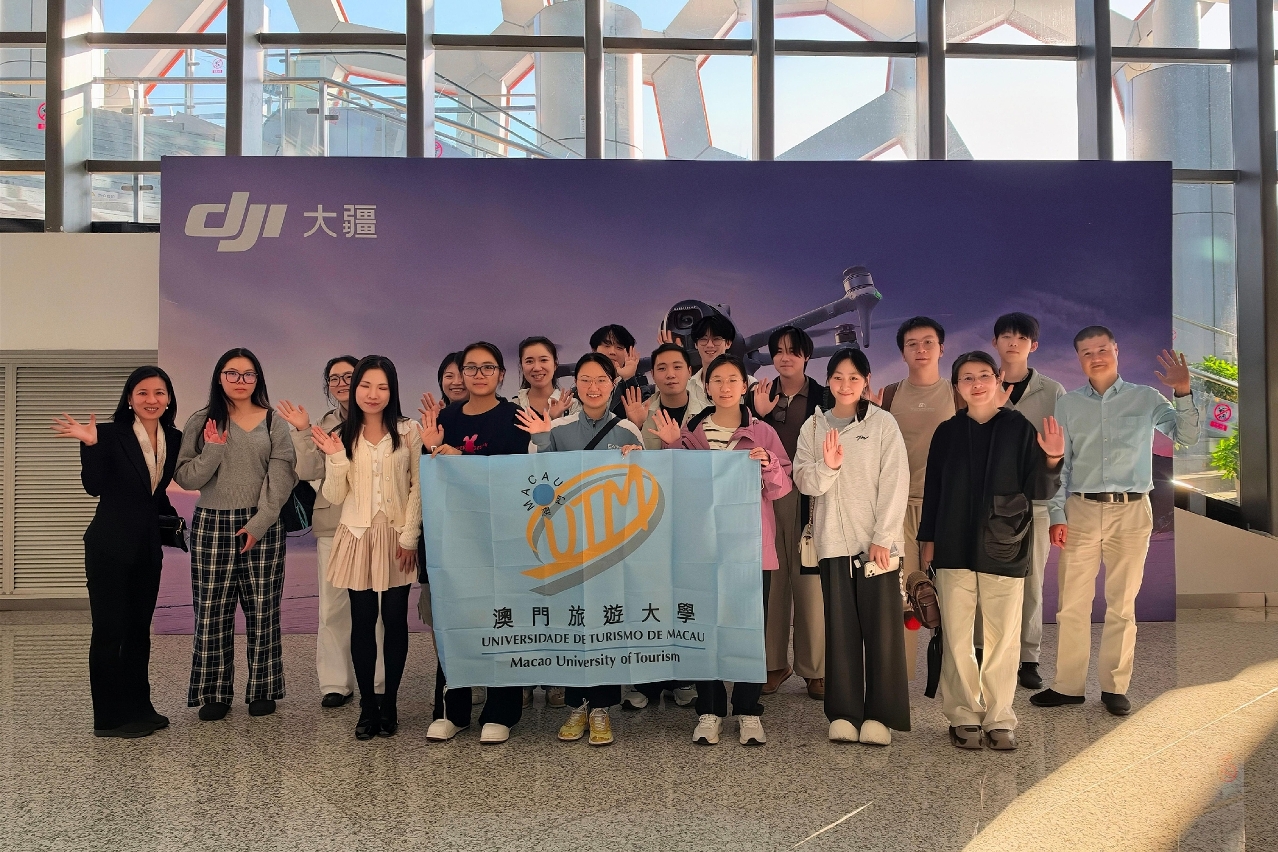
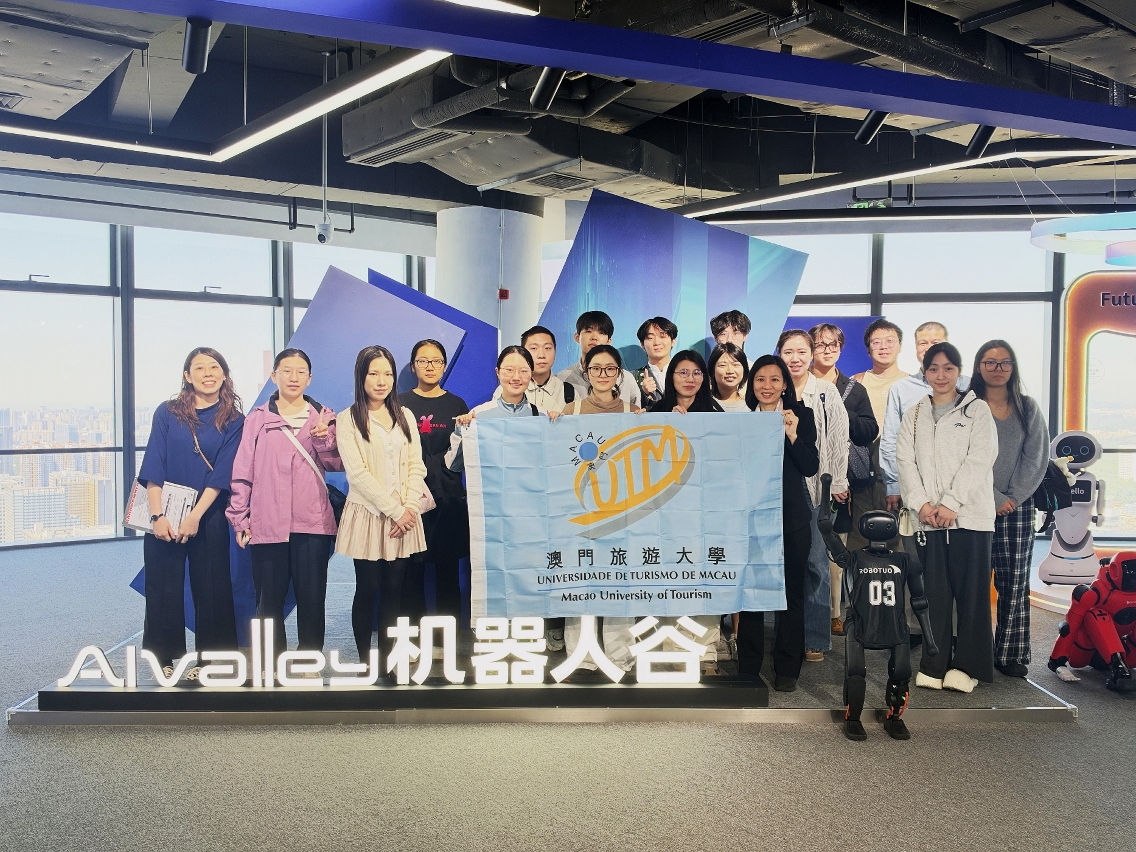
To broaden students' understanding of China's technological innovation and explore how emerging technologies are being integrated into the tourism and service industries, the Shenzhen-Macao Tourism Education Collaboration Centre organised a study tour titled "Smart Bay Area: Technology Empowering the Future" on 10 November for students from the Macao University of Tourism (UTM).
Established in 2024 by UTM and Shenzhen Polytechnic University, the Shenzhen-Macao Tourism Education Collaboration Centre aims to promote resource sharing, collaboration, and innovation in tourism education across the Greater Bay Area. This study tour provided students with an opportunity to step beyond the classroom and gain interdisciplinary insights through direct exposure to real-world technology applications.
The programme focused on humanoid robotics and drone technology. Students visited Nanshan Robot Valley in Shenzhen, where they learned about the development of humanoid robots, their core components, and their diverse industrial applications through product demonstrations and hands-on interactions. They also visited the DJI Experience Centre, where they gained a deeper understanding of the evolution of drone technology, its industry applications, and the engineering concepts behind its development. Under professional guidance, students took part in drone flight operations and team-based challenges, experiencing first-hand the dynamism of technological innovation through observation, discussion, and practical engagement.
The programme also enabled students to experience first-hand rapid development of innovation and technology within the Guangdong-Hong Kong-Macao Greater Bay Area, deepening their understanding of how technological advancements can address industry and societal needs. UTM will continue to enrich students' learning experiences through exchange programmes and experiential learning opportunities, fostering greater integration between tourism education and innovation across different disciplines. The University aims to cultivate students' global outlook and interdisciplinary competencies while injecting new "Technology+" thinking into the ongoing transformation of the tourism and service industries.