 Stephanie develops an innovative genetic testing technology
The University of Macau (UM) continues to strengthen its educational and research collaboration with Portuguese-speaking countries while fostering the development of international talent. UM and the Polytechnic University of Lisbon have been strategic partners for many years and have maintained close collaboration in research and academic exchange. Stephanie Rachell Andaluz Almandoz Ramos, the first Portuguese student from the Polytechnic University of Lisbon to pursue a doctoral degree at UM, developed an innovative genetic testing technology that integrates artificial intelligence (AI) and molecular diagnostics during her studies. The technology offers a new approach to hereditary disease screening and precision medicine. Stephanie has recently completed her PhD in Biomedical Sciences at UM.
Stephanie arrived in Macao in 2022, and has engaged in research spanning cutting-edge fields including population genetics, cancer genomics, precision medicine, and AI. During her doctoral studies, she authored or co-authored six peer-reviewed academic papers and contributed to a patent application.
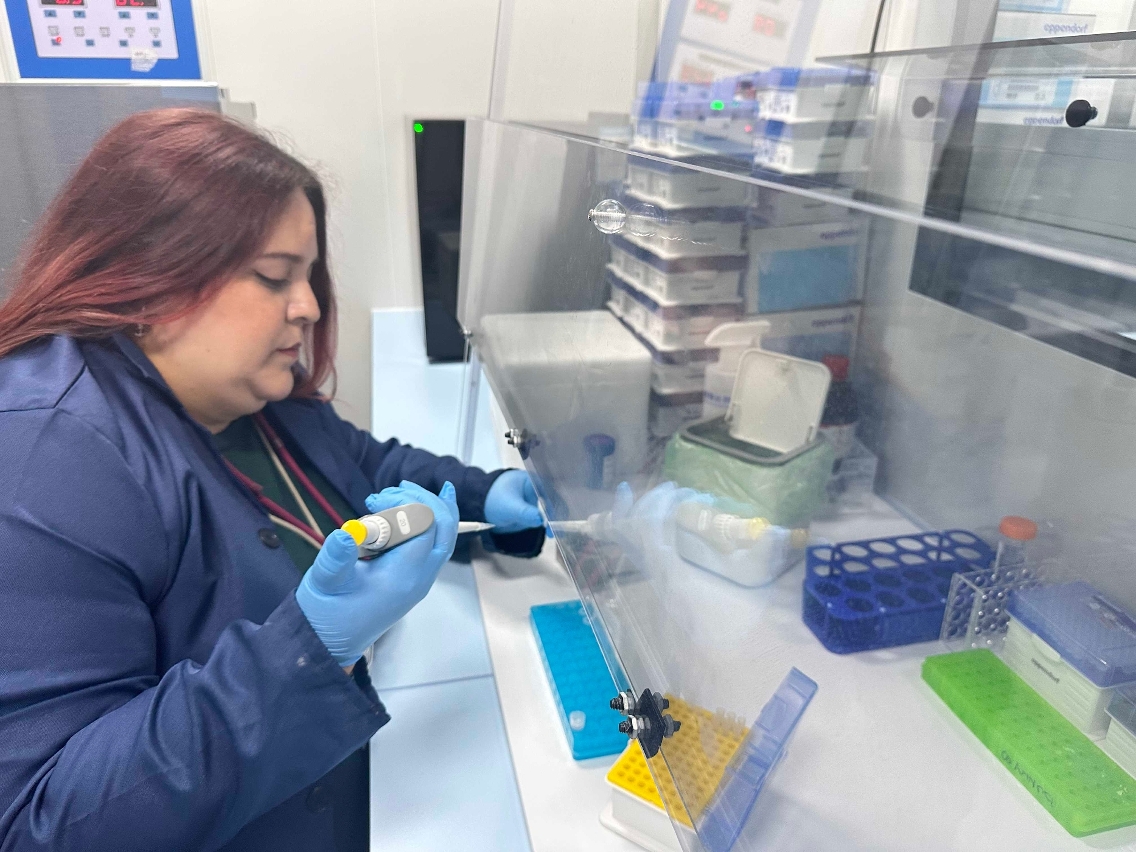
Under the joint supervision of Liu Tzu-ming, associate professor in the Faculty of Medicine (FMD), and Jia Yanwei, associate professor in the Institute of Microelectronics (IME), Stephanie conducted interdisciplinary research and developed a novel genotyping platform named ‘KAIROS’. The platform combines molecular diagnostic technologies with machine-learning algorithms to enable automated and highly accurate analysis of single-nucleotide variants, offering significant potential to improve the efficiency and accuracy of genetic disease detection.
The technology was developed in Prof Jia’s laboratory using kinetic hairpin oligonucleotide blocker technology together with AI algorithms to identify genetic variations associated with hereditary diseases. Using sickle cell disease as a validation model, Stephanie successfully demonstrated the feasibility and accuracy of the platform and completed clinical validation studies. A patent application for the technology is currently underway. The innovation lays an important foundation for next-generation AI-assisted molecular diagnostic tools and the advancement of precision medicine.
Prior to joining Prof Jia’s research team, Stephanie conducted research in the laboratory of Wang San Ming, a retired professor in FMD. Her work focused on the genetic basis of hereditary cancer risk in populations of Portuguese descent. Her research led to the establishment of the first database dedicated to BRCA1 and BRCA2 gene mutations in Portuguese populations, providing valuable data for genetic risk assessment and precision medicine research. The findings were published in the international journal BMC Genomics in 2024.
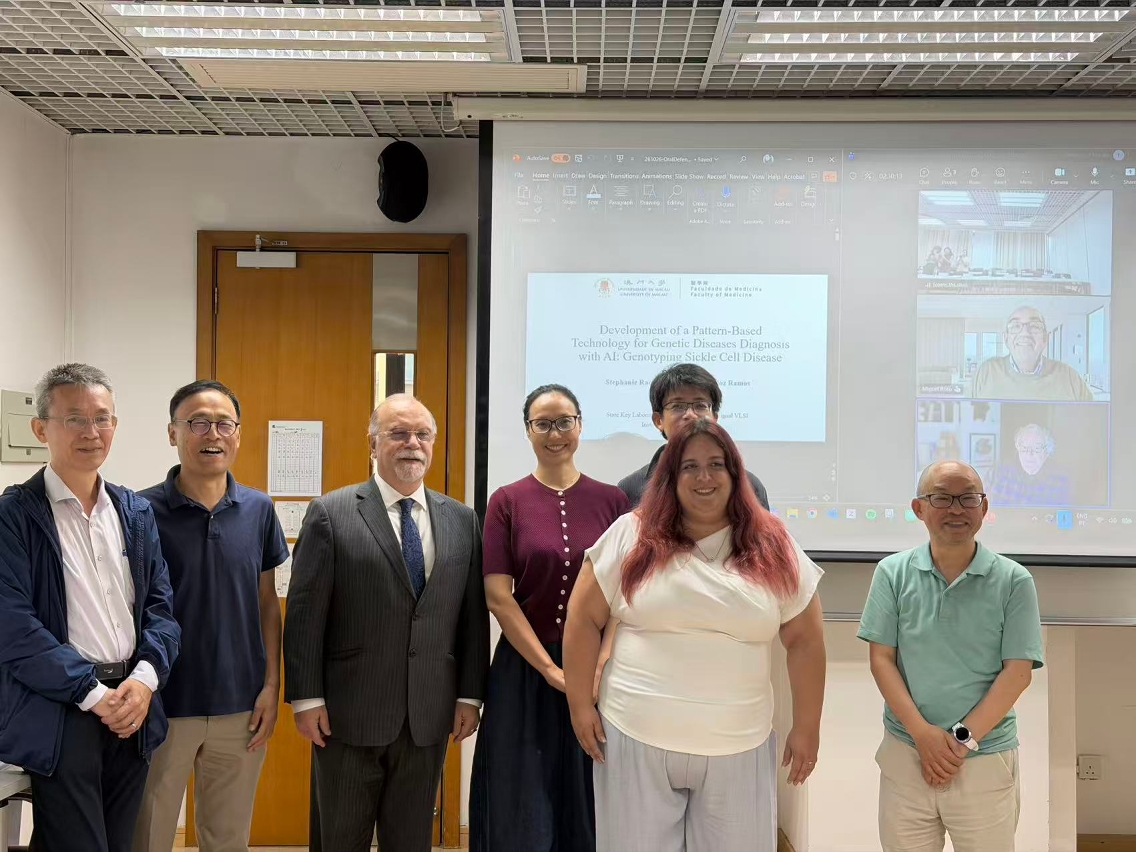
Stephanie recently completed her doctoral thesis defence at FMD. Rui Martins, vice rector of UM, attended the defence in person, while Miguel Brito, principal coordinating professor in the Lisbon School of Health Technology at the Polytechnic University of Lisbon and coordinator of the Health and Technology Research Center, joined online to witness this important outcome of the collaboration between the two institutions.
UM will continue to strengthen its partnerships with higher education institutions and research organisations in Portuguese-speaking countries. Through research and innovation, talent cultivation, and academic exchange, the university will further advance research development and contribute to Macao’s aspiration to become an international hub for high-calibre talent.