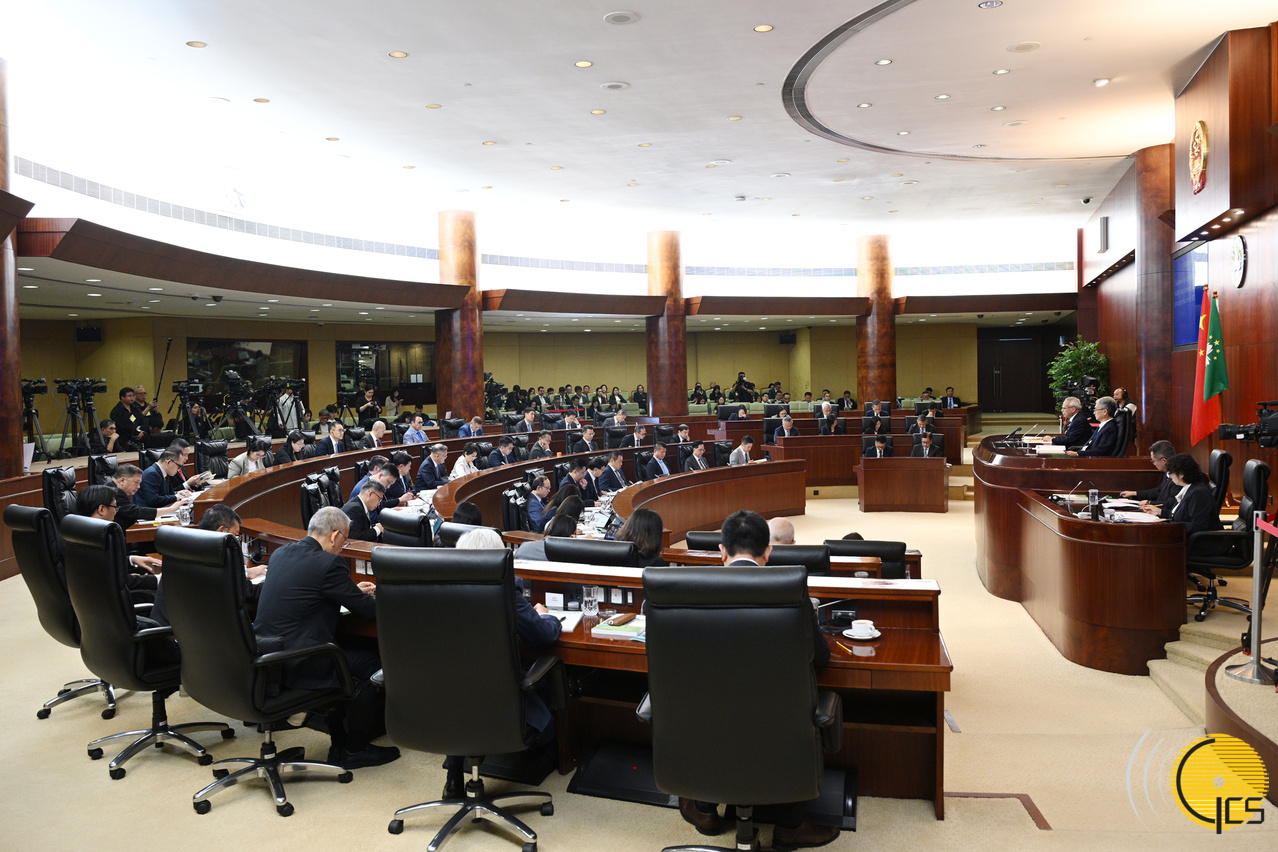
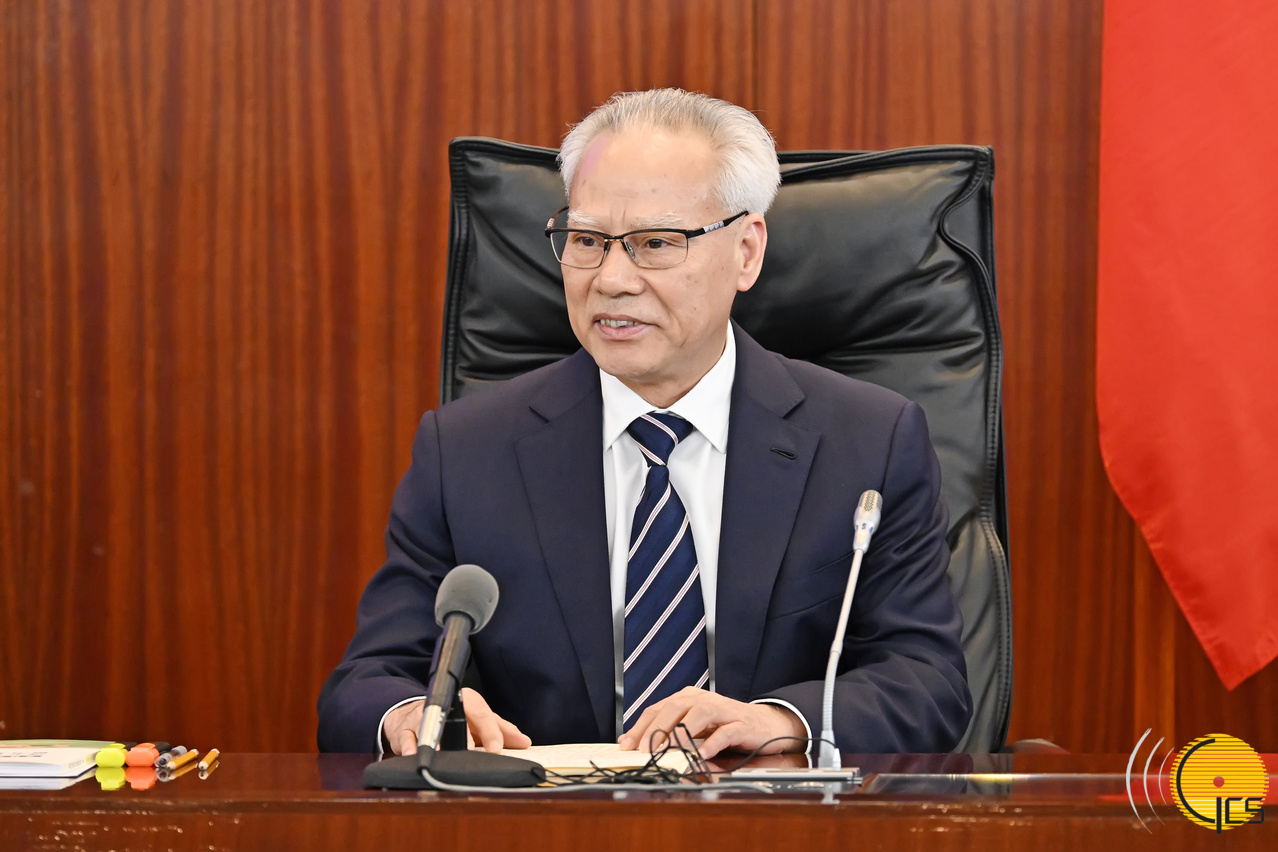
 The Chief Executive, Mr Sam Hou Fai, delivers the 2027 Policy Address at the Legislative Assembly.
The Chief Executive, Mr Sam Hou Fai, delivered at the Legislative Assembly this afternoon the 2027 Policy Address, titled “Uniting to Deliver the Development Blueprint and Collaborating to Build a Better Future”. The main policy objectives set out in the document are: implementing the development blueprint, promoting appropriate diversification, continuously improving public wellbeing, enhancing governance efficiency, strengthening development resilience, and maintaining social stability.
The Chief Executive said the year 2027 will mark the sixth-term Macao Special Administrative Region (MSAR) Government’s third governance year, which is a critical period for the comprehensive implementation of the Third Five-Year Plan and the facilitation of high-quality development. He pledged that the MSAR Government would fully deliver the requirements of the Central Government, proactively respond to the aspirations of Macao residents, uphold and refine the executive-led system, and remain committed to reform, innovation, and a people-centered approach. The Government will continue to uphold the dual mechanism of an efficient market and an active government, while steadily advancing the development of the “One Center, One Platform, One Base, and One Hub”. This is to strengthen Macao’s economic and social resilience and capacity to withstand risks, drive high-quality development, consolidate and enhance the region’s inherent advantages, and better integrate into and serve overall national development, said Mr Sam.
Work plans for each policy portfolio will be formulated in accordance with the annual policy address to set out the specific tasks and targets to be implemented in 2027 regarding the key projects, key initiatives and major reforms outlined in the Third Five-Year Plan to ensure that the plan is effectively executed.
According to the 2027 Policy Address, the MSAR Government will strive, in the coming year, to promote steady economic development and aim for positive growth in the local gross domestic product in the face of overall economic adjustment and downward pressure. It will also strive to maintain relatively low unemployment rates, stable consumer prices, and sound public finances.
Meanwhile the MSAR Government will strive to make further progress in the appropriate diversification of the economy, with new breakthroughs in the development of the Guangdong-Macao In-Depth Cooperation Zone in Hengqin and the deepening of integration between Macao and Hengqin. Livelihood-related initiatives will be optimised further, with effective care provided to vulnerable groups. Urban infrastructure will be improved, and significant strides will be made in urban renewal. Public administration reform will be deepened, enhancing the governance efficiency of the MSAR while strengthening its competitive advantages and resilience against risks. The defences for national security will be consolidated and reinforced, ensuring a peaceful and stable social environment.
In 2027, the Government's policy priorities include the following four areas:
1. Strengthening capacity to address internal and external risks and challenges, and advancing the sustainable development of the MSAR
The Government will strengthen the institutional mechanisms and enforcement capacities for safeguarding national security by facilitating the substantive operation of the Secretariat of the Committee for Safeguarding National Security and ensuring the smooth functioning of the superstructure for safeguarding national security. The Government will initiate preliminary work on the amendment of the Law on Cybersecurity and optimise regulations on internet data security. Anti-terrorism drills and emergency-handling exercises will be strengthened to bolster law enforcement capacities for safeguarding national security.
The Government will conduct a comprehensive review of the effectiveness of the ten-year disaster prevention and mitigation plan, and deepen public awareness and education regarding civil protection. The Government will strive to foster the growth of organisations that love the nation and Macao. It will formulate and implement the Master Plan for National Security Education for the Macao Special Administrative Region (2027–2032). Meanwhile Portuguese and English versions of supplementary teaching materials on national security education will be introduced, the “Ethics and Civics” curriculum for primary schools will be revised, and public legal education initiatives concerning the Constitution, the Basic Law, and the Law on Safeguarding National Security will be persisted.
The Government will uphold and refine the executive-led system, and comprehensively advance public administration reform. It will explore revisions to the General Regulations for Members of the Executive Council to enhance the quality and efficiency of the Executive Council’s support for the Chief Executive’s decision-making.
The Government will carry out the second phase of refining the functional structure of government entities. It will advance the organisational restructuring of departments—including the Pension Fund, the Statistics and Census Service, the Gaming Inspection and Coordination Bureau, the Pharmaceutical Administration Bureau, the Education and Youth Development Bureau, and the Marine and Water Bureau—while reviewing and optimising the establishment and operation of advisory bodies. The Government will launch upgraded versions of the Macao One Account (3.0) and the Business & Associations Platform (2.0) to further expand the scope of services provided. The Government will accelerate the updating of the MSAR’s legal system, formulate an interim legislative plan for 2028, and systematically implement the enactment of key laws and regulations across various sectors. The Government will complete the draft bills on the amendments to the Civil Procedure Code and the Administrative Procedure Code. The Government will also draft preliminary directions for the revision of the Penal Code and the Criminal Procedure Code, and initiate the relevant consultation process. It will continue to strengthen refined governance at the grassroots level, and better leverage the synergistic role of community associations in local governance.
2. Enhancing the competitiveness of diversified industries and building a vibrant MSAR
The Government will launch the Government Guidance Fund and begin the fund’s operation. It will advance the development of “One Centre”, and expand into markets across Europe, India, the Middle East, Central Asia, and the Muslim world, while exploring the establishment of representative offices in Northeast Asia. It will promote the growth of the traditional Chinese medicine (TCM) Big Health industry. It will actively foster the development of specialised financial services, accelerate the legislative process for the Securities Law, and revise the legal framework for currency issuance along with other relevant regulations. It will proactively engage with and attract high-quality domestic and international private equity funds, venture capital firms, and industrial capital to establish a presence in Macao. It will expedite the development of the Macao Technology Research Industrial Park, and advance preliminary research for legislation on the promotion of the technology industry.
The Government will promote the development of a platform for sharing scientific and technological resources. It will support the upgrading of traditional industries by exploring and launching a pilot scheme for empowering and upgrading new-style industrialisation in Macao. It will optimise the business environment to foster corporate growth by providing tax incentives for qualified aircraft operating leasing companies and aircraft leasing management service companies established in Macao. It will initiate legislation to include the operating leasing of high-value equipment—such as aircraft and vessels—within the scope of tax incentives. It will enhance the “Business-to-Government” (B2G) service platform to support small and medium-sized enterprises (SMEs) in boosting their competitiveness, and launch a digital support service scheme for SMEs in 2027.
The Government will press ahead with the construction of the Cooperation Zone in Hengqin to promote Macao’s appropriate economic diversification. It will promote and improve the “four-shared” mechanism (joint discussion, joint construction, joint administration and shared benefits), make effective use of legislative resources to promote institutional connectivity, advance flagship projects to strengthen infrastructure connectivity, leverage diversified advantages to empower industrial synergy, and optimise public services to foster closer ties between peoples.
The Government will build an international hub for high-caliber talent by amending the legal regime for talent recruitment; deepening regional and international talent cooperation; aligning the structure of academic disciplines with industry demands; focusing efforts on nurturing talent specialised in Chinese and Portuguese languages, culture, science and technology, and medical sciences; and expediting the cultivation of local talent with practical skills.
3. Prioritising public wellbeing to build a MSAR where residents can live and work in peace and contentment
The Government will continue to implement the Wealth Partaking Scheme and various tax relief measures. It will review and optimise employment support initiatives, refine the two-tier social security system, and accelerate urban renewal and the development of urban infrastructure. It will conduct a comprehensive survey of aging buildings and facilitate their repair, with priority given to those at least 40 years old. It will maintain ongoing support for vulnerable groups, proactively address the challenges of a low birth rate and an aging population, enhance the quality of healthcare services, optimise housing policies, and improve residential amenities. It will strengthen the empowering role of technology, solidify the foundations of education, and provide comprehensive support for the growth and advancement of young people. It will bolster Macao’s cultural soft power, promote the integrated development of both recreational and competitive sports, actively advance environmental protection efforts, refine urban management, and foster the creation of a beautiful city.
4. Strengthening the advantages of domestic links and external connectivity to better integrate into and serve the overall development of the country
The Government will actively participate in the development of the Guangdong-Hong Kong-Macao Greater Bay Area (GBA) and implement the Major Work Arrangements for the Development of the Guangdong-Hong Kong-Macao Greater Bay Area in 2027. It will explore the establishment of a joint conference mechanism for the heads of the three regions—Guangdong, Hong Kong, and Macao—as well as a joint office to coordinate the execution of key GBA development tasks. It will coordinate and organise the 2027 Guangdong-Macao Cooperation Joint Conference. It will leverage platforms such as the Guangdong-Hong Kong-Macao Greater Bay Area Development Business Conference to assist Chinese mainland enterprises in expanding into international markets via Macao. It will encourage high-quality Chinese mainland issuers to utilise Macao as a platform for cross-boundary financing, and facilitate the channelling of diverse overseas capital into key projects within the Chinese mainland.
The Government will expand and deepen cooperation across diverse sectors, including intellectual property, food safety, emergency management, transportation, environmental protection, meteorology, and geographic information. It will advance the implementation of the tasks outlined in the Five-Year Work List for Macao’s Comprehensive Participation in and Contribution to the ‘Belt and Road’ Initiative (2024–2028). It will prepare for the ninth joint meeting on “Belt and Road” initiative cooperation.
The Government will deepen collaboration with provinces and municipalities in the Chinese mainland. It will promote the high-quality development of the platform for commercial and trade cooperation between China and Portuguese-speaking countries, and organise the 7th Ministerial Conference of the Forum for Economic and Trade Co-operation between China and Portuguese-speaking Countries (Macao). It will strengthen economic and trade cooperation between China, Portuguese-speaking and Spanish-speaking countries; establish a dedicated task force to provide support for enterprises expanding abroad, leveraging Macao’s professional service resources—such as finance, law, and accounting—to facilitate the entry of more projects into overseas markets via the Macao platform. It will deepen scientific and technological innovation cooperation among China, Portuguese-speaking and Spanish-speaking countries by launching funding schemes to support the establishment of joint laboratories and the organisation of research activities, while encouraging Macao’s research institutions to strengthen ties with their counterparts in Portuguese- and Spanish-speaking countries. It will launch a youth exchange scheme for China, Portuguese- and Spanish-speaking countries, aiming to support a total of 500 young people from Macao, Portugal, and Spain over five years to participate in study tours or student exchange programs. It will accelerate the development of “One Base” (a base for exchange and cooperation with Chinese culture as the mainstream and the coexistence of diverse cultures).