

The Zhejiang Wu Opera Research Centre travels to Macao with Three Attacks on the White Bone Demon, a Wenhua Award-winning play based on the much-loved Chinese classic Journey to the West. Traditional performance skills meet contemporary stage technology in a production that showcases a hallmark of Wu opera: the seamless interplay between physical prowess and lyrical artistry. Expressive vocals enrich dynamic combat scenes, while vigorous physicality breathes life into melodic sequences.
In this vibrant reimagining, the White Bone Demon thrice assumes human form in her quest to devour the monk Tang Sanzang, only to be exposed each time by Sun Wukong, the Monkey King. Determined to protect his master, Wukong strikes at the demon, but Tang Sanzang mistakes his actions for the killing of three innocent people and angrily banishes Wukong. Later, when the monk is captured, Wukong puts aside the grievance and rushes to the White Bone Demon's lair to rescue him. Lively and action-packed, this production fuses traditional tumbling and martial arts skills with rapid face-and-costume changes, and even drones, injecting a fresh theatrical charge into a familiar classic.
The Zhejiang Wu Opera Research Centre was founded in 1956. A major institution dedicated to the preservation, creation and performance of Wu Opera, it has spent decades recovering and documenting the genre's artistic traditions, collecting and cataloguing hundreds of works while continuing to develop original productions and pass the art form on to new generations.
Approximately 2 hours and 10 minutes, without interval
Performed in dialects, with surtitles in Chinese and English
Suitable for aged 6 or above
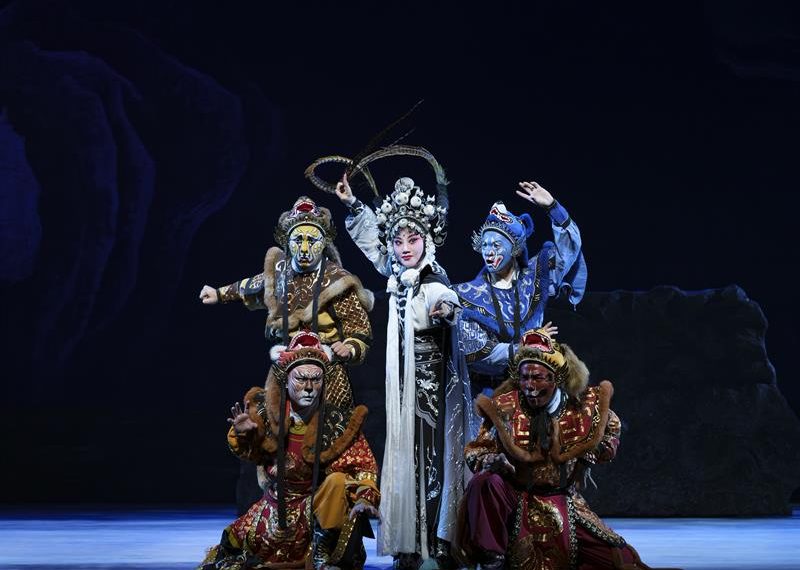
Three Attacks on the White Bone Demon