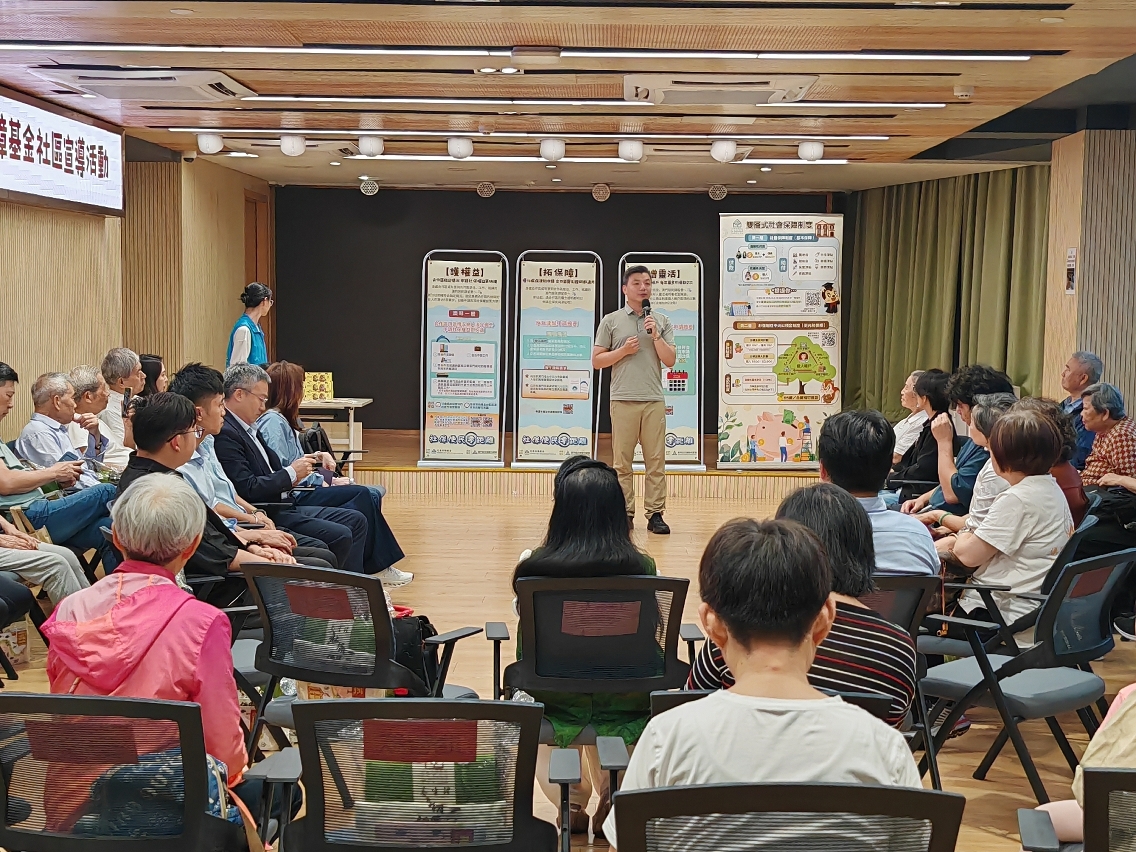
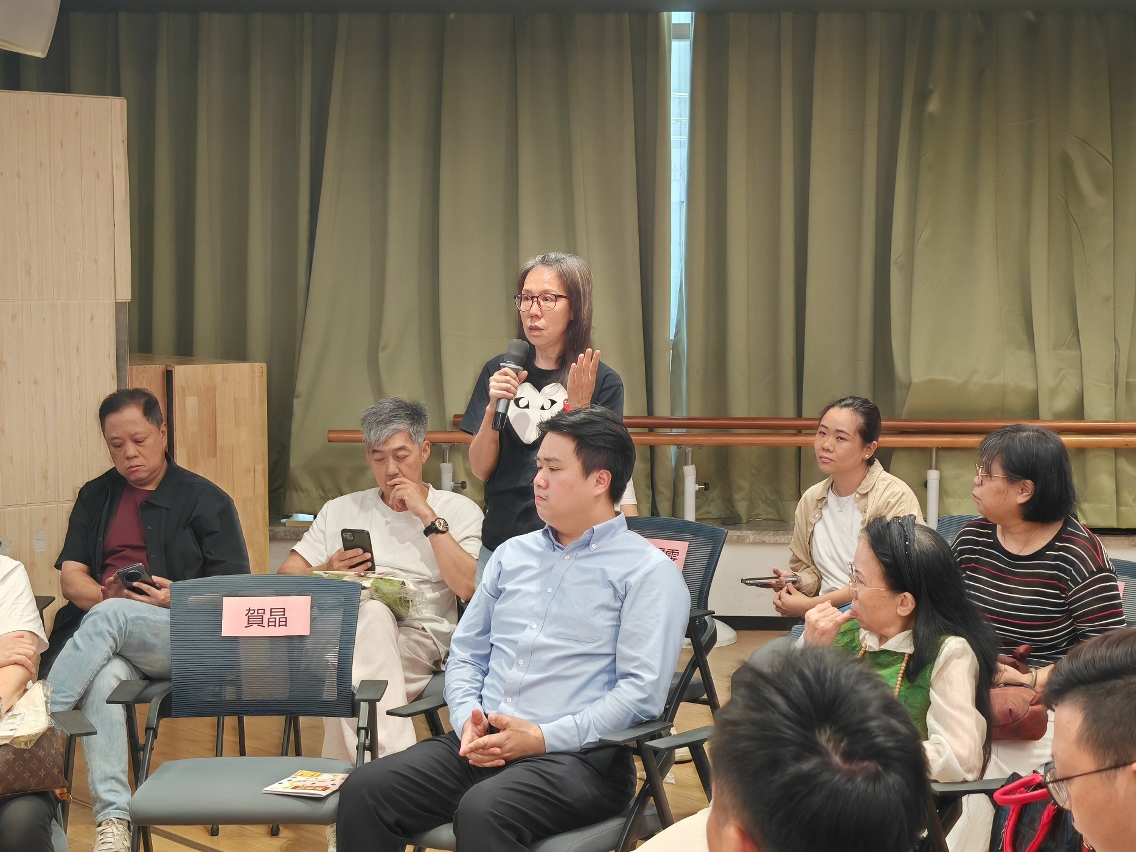
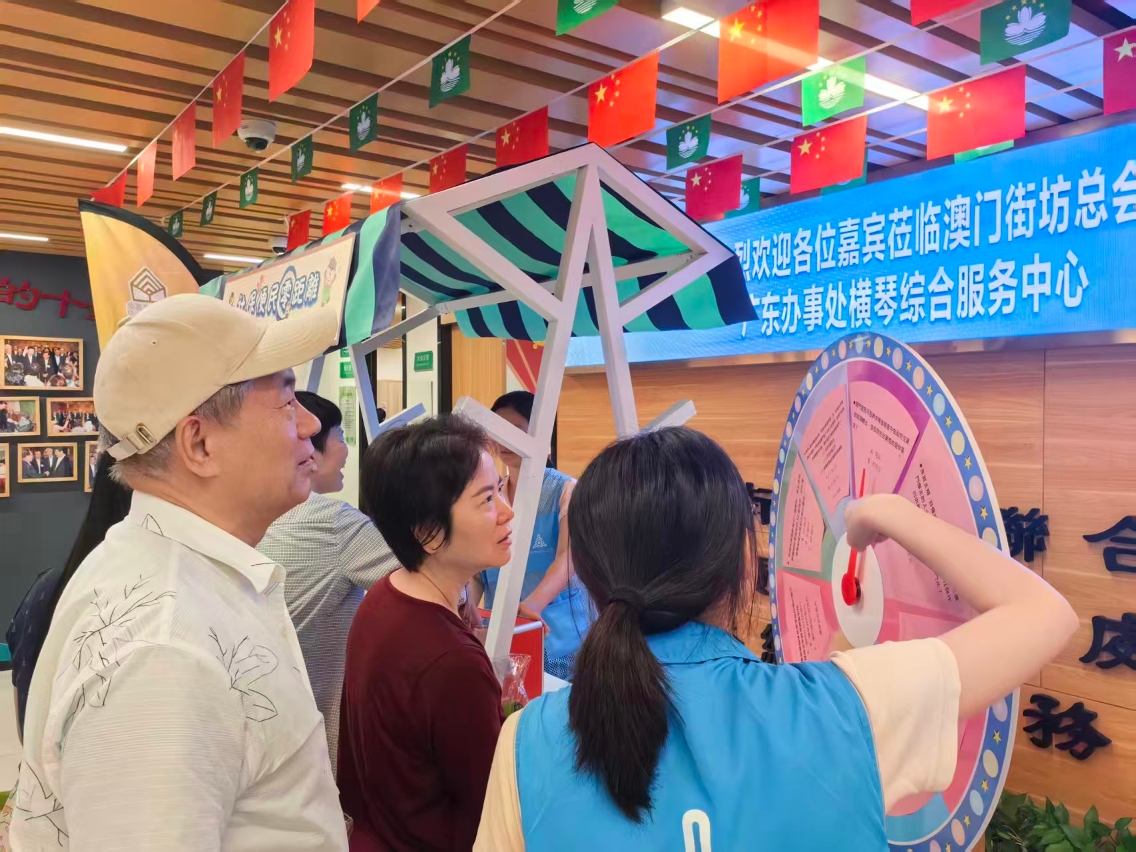
Photo 1:The Social Security Fund, together with community associations, hosts activities in the Cooperation Zone to highlight new cross-border social security facilitation measures.
To support the implementation of the newly revised legislation governing Macao’s two-tier social security system, the Social Security Fund recently partnered with the General Union of Neighbourhood Association of Macao to organise two community outreach sessions in the Guangdong–Macao In-Depth Cooperation Zone in Hengqin (the “Cooperation Zone”). The events introduced the revised provisions to Macao residents living, working, or studying in the Cooperation Zone and promoted a series of new cross-border social security facilitation measures. Approximately 480 people participated in total.
Under the theme “Social Security Convenience Without Distance”, the sessions were held at the Hengqin Integrated Service Centre, the Guangdong Office of the General Union of Neighbourhood Association of Macao, and the Elderly Service Centre of the Macao New Neighbourhood in Hengqin. The briefings were delivered by Luís Gomes, Vice-President of the Social Security Fund Administrative Committee, who outlined the key points of Law No. 3/2026, which took effect on 24 March 2026.
The revised law provides that periods Macao residents spend in the Cooperation Zone are deemed to be spent in the Macao SAR. This includes residing, working, or studying in tertiary or non-tertiary education courses recognised by the competent local authorities, as well as working outside Macao while bearing the main living expenses of a spouse, direct relatives, or in-laws residing in Macao or the Cooperation Zone. These circumstances are now expressly recognised as statutory exceptions. As a result, days spent in the Cooperation Zone may be counted as days of residence in Macao when applying for enrolment in the Arbitrary System or for inclusion in the fund allocation list under the Non-Mandatory Central Provident Fund.
Additional revisions allow medical certificates issued and signed by licensed medical practitioners at Cooperation Zone medical institutions to be accepted for sickness allowance applications. Furthermore, withdrawals from Non-Mandatory Provident Fund individual accounts have increased from once to twice per year. These measures make cross-border living and working more convenient for Macao residents and further promote integration between Hengqin and Macao.
Interactive booth activities were also arranged, featuring quizzes on the revised law. Staff were present to answer questions, helping residents gain a clearer understanding of the legal provisions and application procedures in an engaging and accessible way.
The Social Security Fund stated that this activity has effectively brought social security service resources closer to the community, ensuring that cross-border facilitation information reaches target residents accurately. Looking ahead, the Fund will continue to promote the Social Security System and the Non-Mandatory Central Provident Fund System, helping residents gain a clearer understanding of the two-tier framework and safeguarding their social security rights.
Attendees included Tang Choi Ieng, Head of the Division of Contributions at the Social Security Fund; Lao Kin Ieng, Head of the Division of Public Relations and Technical Support; Tian Yi, Director of the Guangdong Office of the General Union of Neighbourhood Association of Macao; Chan Wai Leong, Deputy Director; and Hong Un Kei, Director of the Elderly Service Centre of the Macao New Neighbourhood in Hengqin.