 Macao University of Tourism Hosts Webinar on "Sustainable Hospitality"
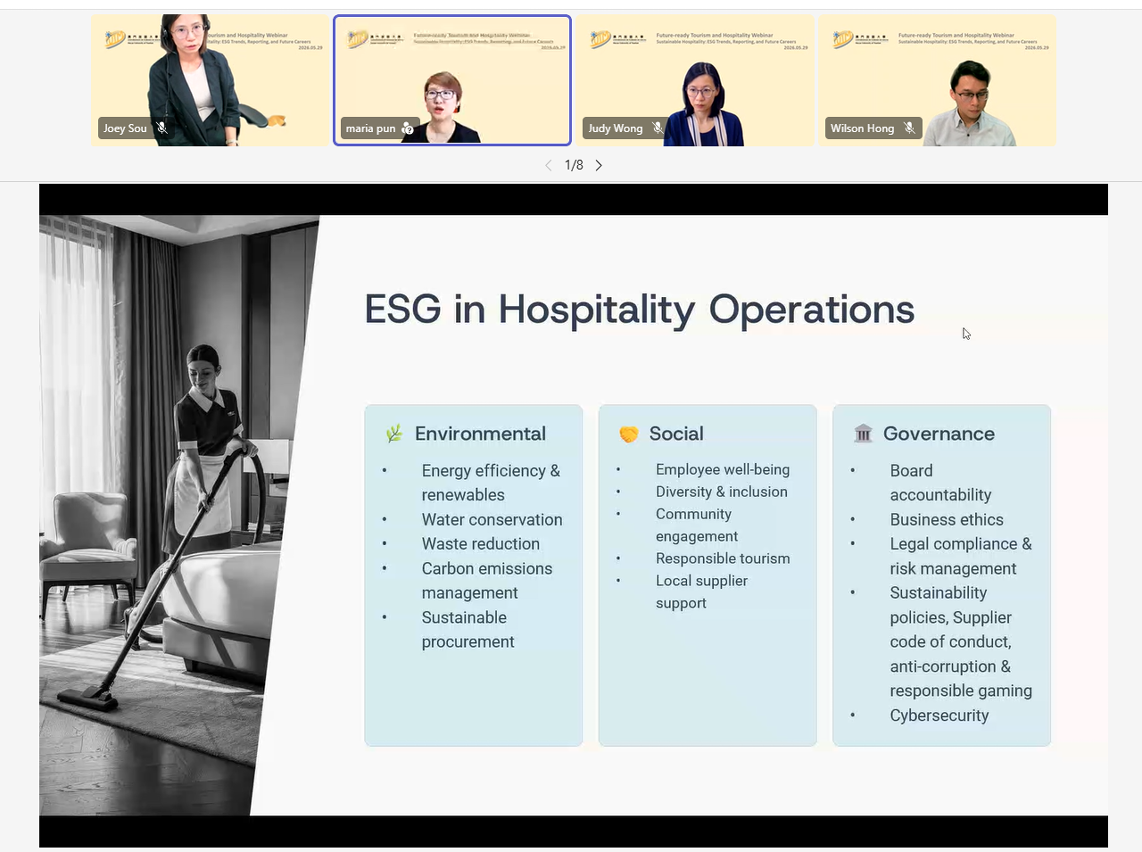
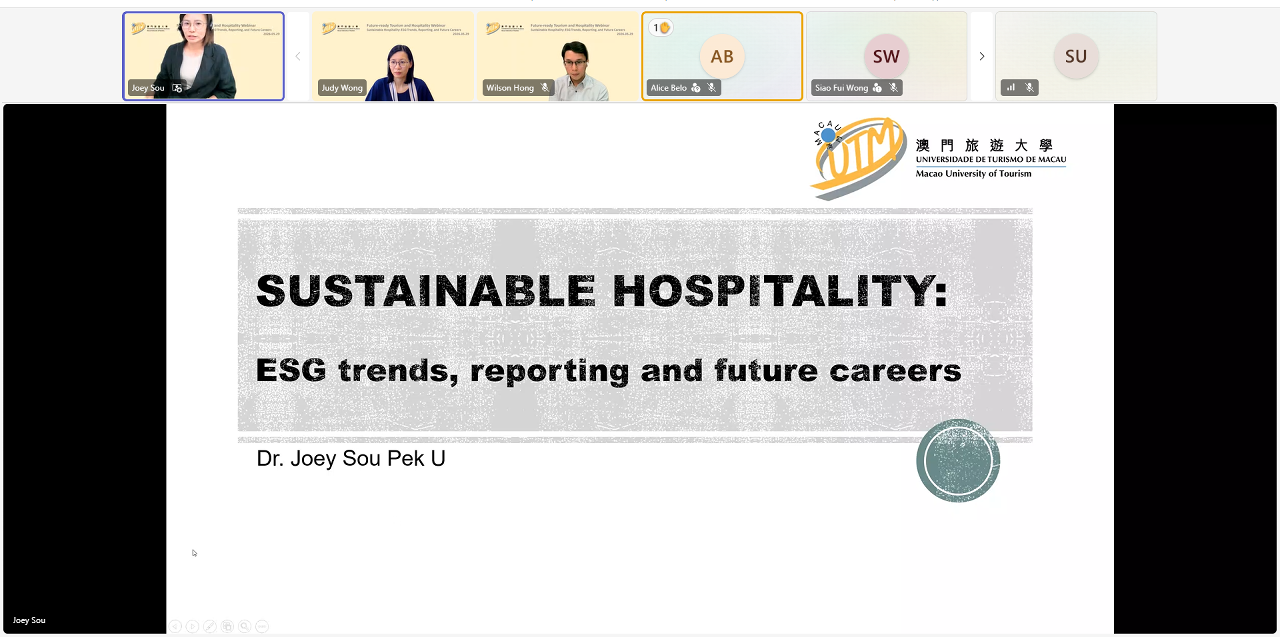
On 29 May 2026, the Macao University of Tourism (UTM) hosted a webinar under its "Future-Ready" series, titled "Sustainable Hospitality: ESG Trends, Reporting, and Future Careers." The event brought together academic and industry expertise to explore the growing importance of Environmental, Social, and Governance (ESG) practices in the hospitality sector. The webinar was moderated by Dr. Wilson Hong, Assistant Professor at UTM, and featured two speakers: Dr. Joey Sou, Assistant Professor at UTM, and Ms. Maria Pun, Director of Sustainability at a luxury hospitality and integrated resorts group.
Dr. Sou provided an academic overview of the evolution from CSR to ESG, highlighting key differences in measurement approaches, business integration, and regulatory drivers, while Ms. Pun offered an industry perspective, discussing how sustainability is reshaping hospitality operations through climate risk management, renewable energy adoption, AI-powered waste reduction, and smart building technologies. She also outlined emerging career opportunities in the field.
During the interactive Q&A session, the panellists engaged in in-depth discussions on several topics of practical relevance. Both speakers highlighted technology and AI as critical enablers for advancing sustainability goals, particularly in data management and resource efficiency. Companies of all sizes were urged to begin their sustainability journey without delay, as climate-related financial risks are accelerating faster than many anticipate.
The webinar underscores UTM's commitment to bridging academia and industry, equipping students with the knowledge and skills needed to thrive in the rapidly evolving landscape of sustainable hospitality.