Group photo
The Education and Youth Development Bureau (DSEDJ) and the Chinese‒Portuguese Bilingual Talent Training Alliance, comprising the University of Macau, Macao Polytechnic University, the Macau University of Science and Technology, the City University of Macau and the University of Saint Joseph, jointly organise the 4th Forum for Rectors of Higher Education Institutions of China and Portuguese-Speaking Countries from 15 to 17 June this year. Participants will engage in in-depth discussions around the theme ‘Empowerment Through Technology and Interconnection Through Language — Macao‒Hengqin Synergy in Joint Cultivation of Chinese‒Portuguese International Talent’, thereby fostering multilateral exchange and cooperation. The current edition of the Forum coincides with the 35th Annual Meeting of the Association of Portuguese Language Universities (AULP). Together, the two events are drawing in over 150 leaders and representatives of higher education institutions and organisations from Portuguese-speaking countries, including Portugal, Brazil, Cape Verde, Mozambique and Timor-Leste, as well as from the Chinese mainland and Macao.
The opening ceremony of the Forum took place on the afternoon of 15 June at the Macau University of Science and Technology. Officiating guests included O Lam, Secretary for Social Affairs and Culture of the Government of the Macao Special Administrative Region (MSAR); Lyu Yuyin, Deputy Director of the Liaison Office of the Central People’s Government in the MSAR; Gao Yuan, Director of the Department of Information and Public Diplomacy at the Office of the Commissioner of the Ministry of Foreign Affairs in the MSAR; Kong Chi Meng, Director of the DSEDJ; Xie Ying, Deputy Secretary-General of the Permanent Secretariat of the Forum for Economic and Trade Cooperation Between China and Portuguese-Speaking Countries (Macao); Eduardo Velasco Galiano, Consul-General of the Republic of Angola in Macao; Rodrigues Victorino Muebe, Consul-General of Mozambique in Macao; Astrigilda Silveira, President of the AULP and Rector of the University of Cape Verde; Jian-Kang Zhu, President of the Macau University of Science and Technology; Yonghua Song, Rector of the University of Macau; Zhou Zhongrong, Rector of Macao Polytechnic University; Jun Liu, Rector of the City University of Macau; Alejandro Salcedo Garcia, Acting Rector of the University of Saint Joseph; and Wang Xin, Vice President of Shanghai International Studies University.
In his address, DSEDJ Director Kong Chi Meng noted that Macao, as an important bridge for cooperation between China and Portuguese-speaking countries, possesses a unique historical and cultural heritage, as well as the advantage of Chinese–Portuguese bilingualism. In tight alignment with the development concept of ‘leveraging Macao’s strengths to meet national needs’, the MSAR Government is proactively and closely linking its Third Five‑Year Plan to our country’s 15th Five‑Year Plan, including rolling out the major infrastructure project for the Macao‒Hengqin International Education (University) Town, with a view to encouraging local higher education institutions to deepen cooperation with their counterparts in the Mainland and Lusophone countries. It is hoped that this year’s Forum will leverage educational partnerships to drive cultural exchange, and cultural integration to foster comprehensive cooperation, thereby further consolidating and deepening people-to-people ties that underpin long-standing Sino-Lusophone relations.
AULP President Astrigilda Silveira said in her speech that the Forum is dedicated to strengthening academic, scientific and cultural cooperation among higher education institutions in Lusophone countries, and to promoting the development of a more integrated academic community. She hoped that the event would consolidate partnerships and harness the transformative power of universities. Jian-Kang Zhu, President of the Macau University of Science and Technology, remarked that the Forum has built a solid and warm bridge for Sino-Lusophone cultural and people-to-people exchanges, spanning from the vision for higher education under the ‘Belt and Road’ Initiative to in-depth regional development centred on the theme of ‘Portuguese Language in China — From Macao and the Greater Bay Area’.
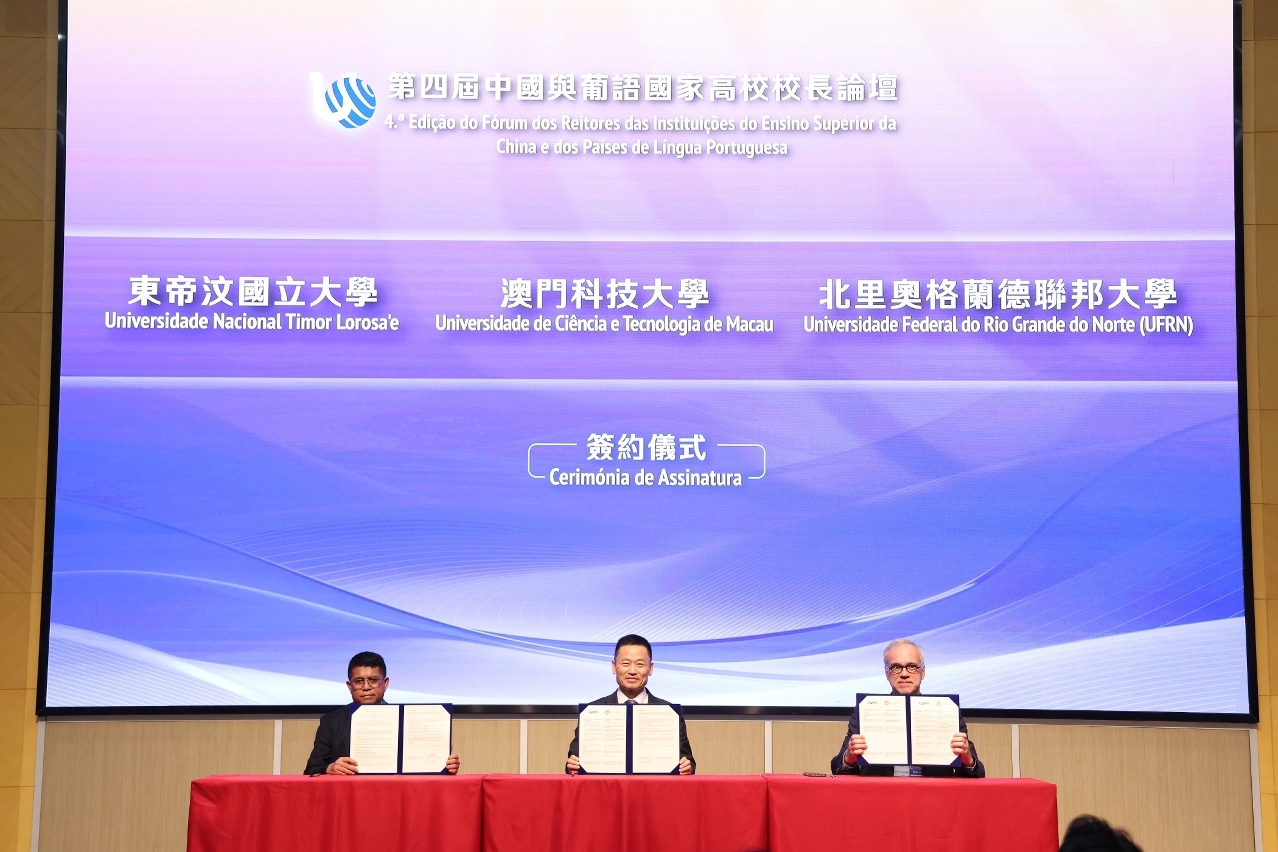
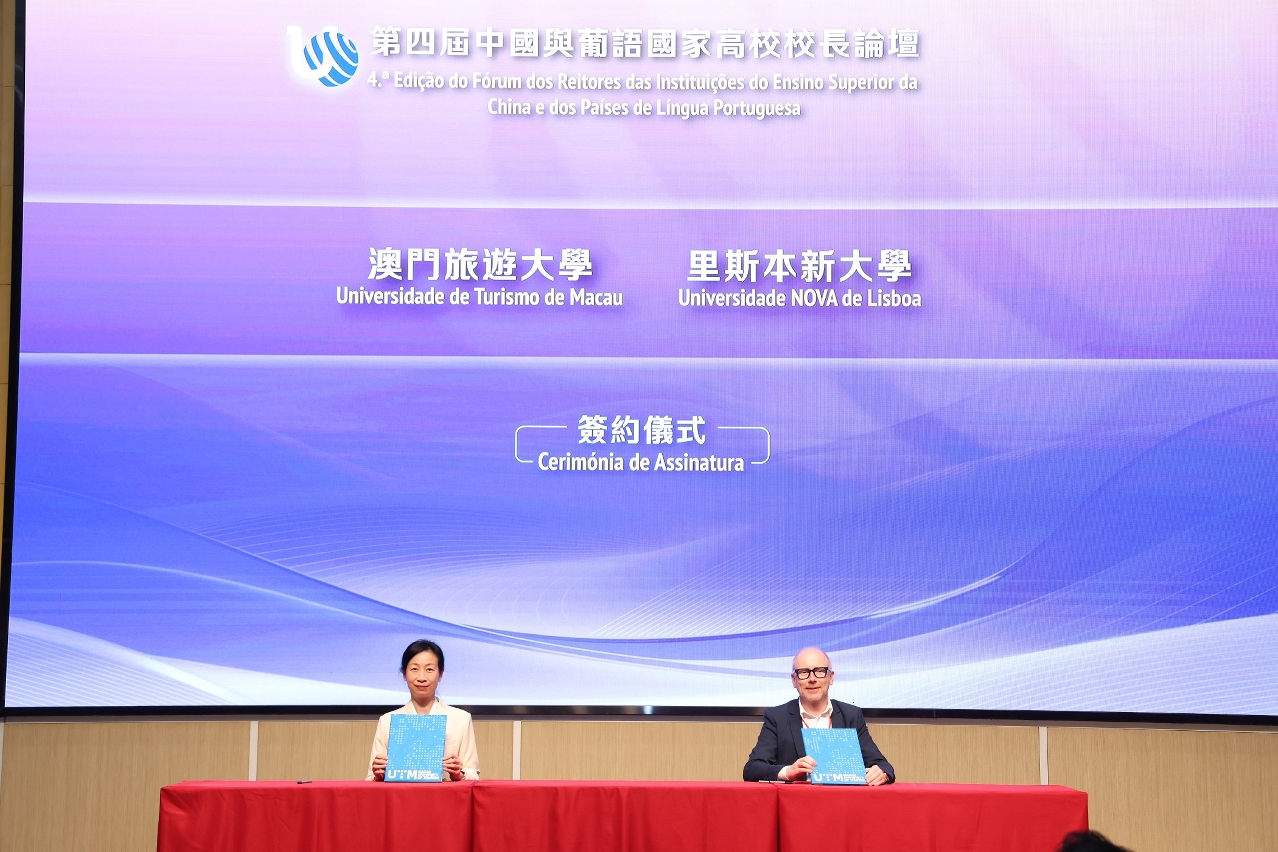
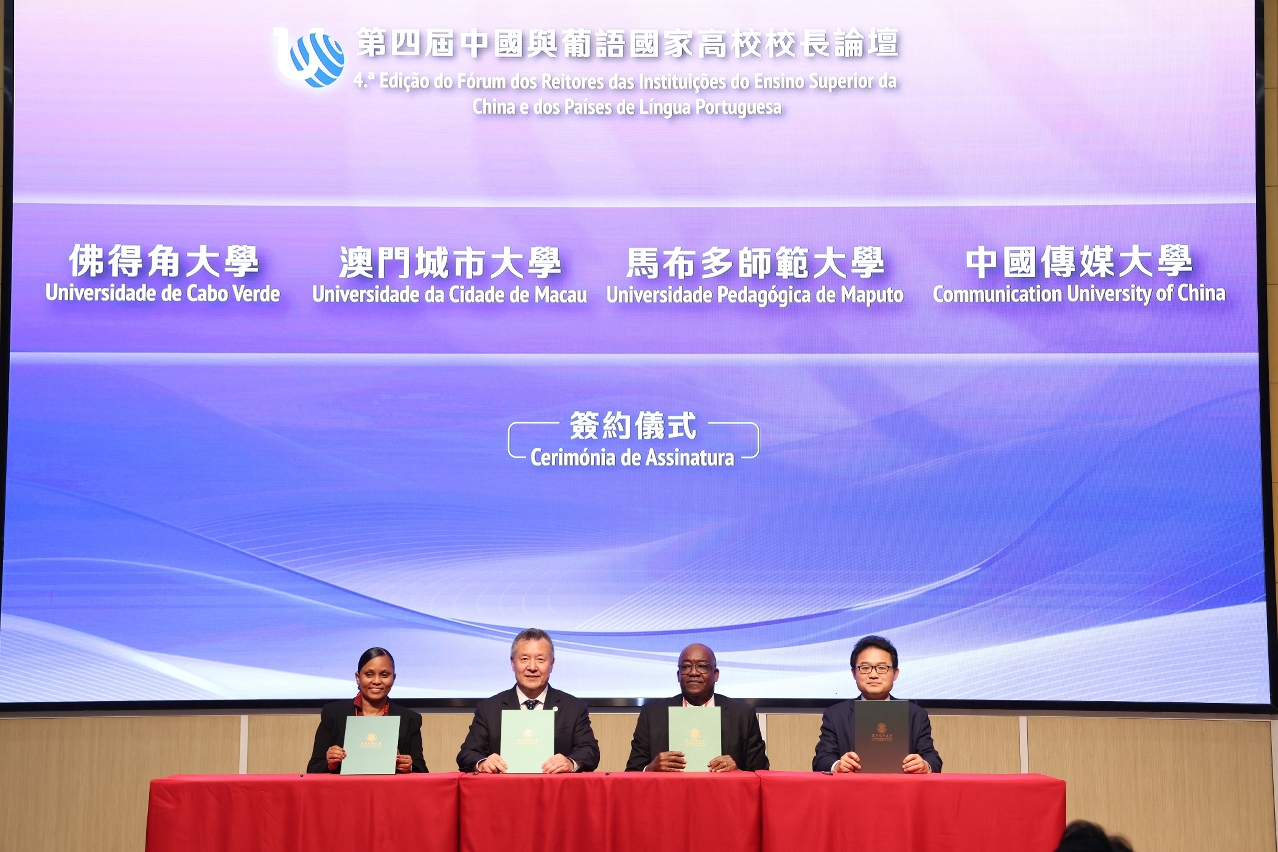
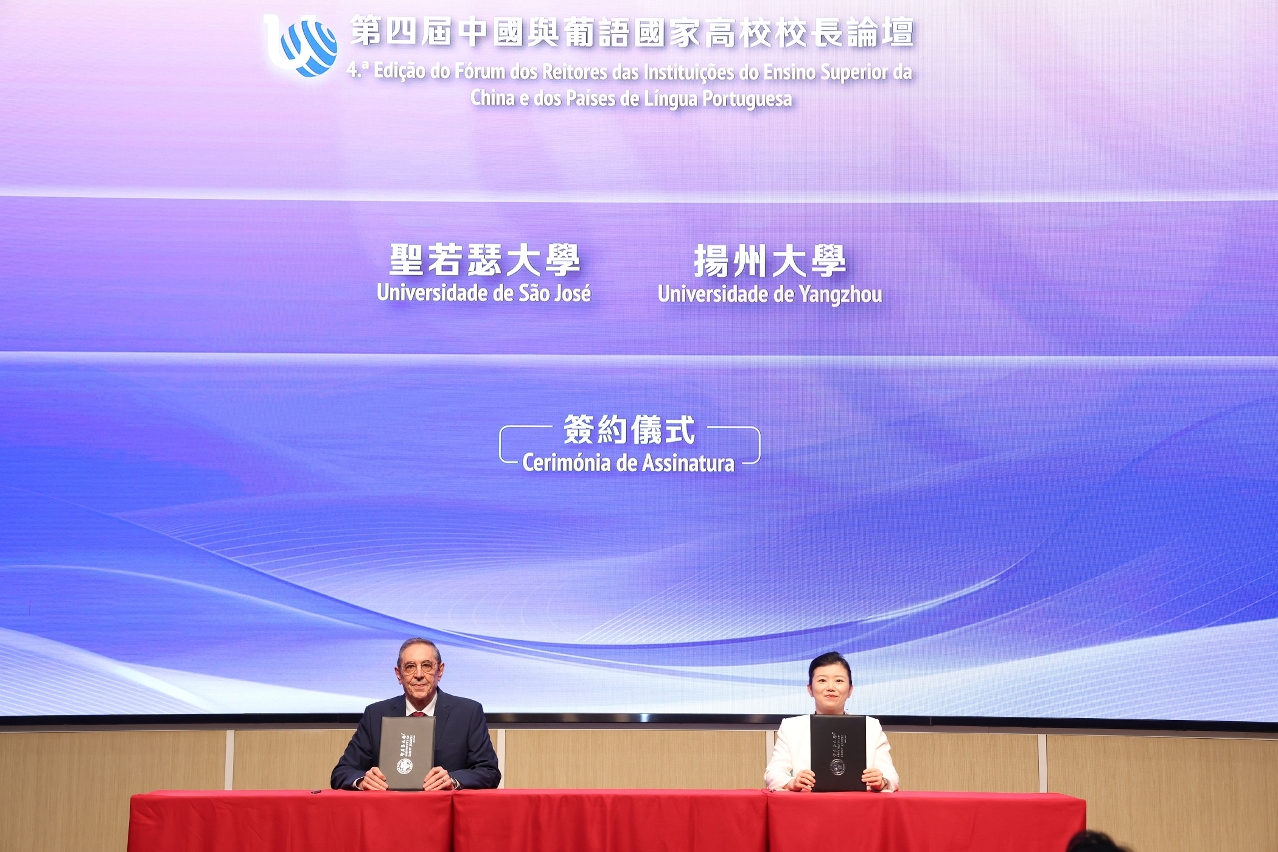
During the opening ceremony, memoranda of cooperation were signed between the Macao University of Tourism and NOVA University Lisbon; among the Macau University of Science and Technology, the National University of Timor-Leste and the Federal University of Rio Grande do Norte; among the City University of Macau, the University of Cape Verde, the Pedagogical University of Maputo and the Communication University of China; between the University of Saint Joseph and Yangzhou University; and among Macau Millennium College, the University of Cape Verde, ISCTE – University Institute of Lisbon and the University of Minho, aiming to further intensify educational cooperation and exchange.
The Forum is running for three days, featuring three sub-forums to be held at the Macau University of Science and Technology between 16 and 17 June on topics including ‘Pooling “Bilingual + Professional” International Talent’, ‘AI-Empowered Humanities Communication in New Media’, and ‘Promoting the Institutional Integration of Traditional Chinese Medicine Culture into Higher Education Programmes in Portuguese-Speaking Countries’. In addition, a visit to the Guangdong‒Macao In-Depth Cooperation Zone in Hengqin will also be organised for visiting university leaders and representatives from Lusophone countries and the Chinese mainland to learn about the master plan for the Macao‒Hengqin International Education (University) Town, as well as the ‘Macao + Hengqin’ development paradigm.
The MSAR Government is actively advancing the integrated development of education, technology and talent cultivation. It has persistently supported Macao’s higher education institutions in strengthening academic exchanges and educational and research collaborations with Portuguese-speaking countries. Meanwhile, it is pushing forward the development of the Macao‒Hengqin International Education (University) Town, introducing high-quality higher education resources from abroad and launching joint training programmes with overseas institutions, thereby boosting the internationalisation of Macao’s higher education. Moreover, the DSEDJ will continue to create favourable conditions to systematically enhance the overall Portuguese language proficiency of students in both higher and non-higher education institutions in Macao, with the goal of nurturing well-rounded Chinese‒Portuguese bilingual interdisciplinary talent.