 Liang Hualou
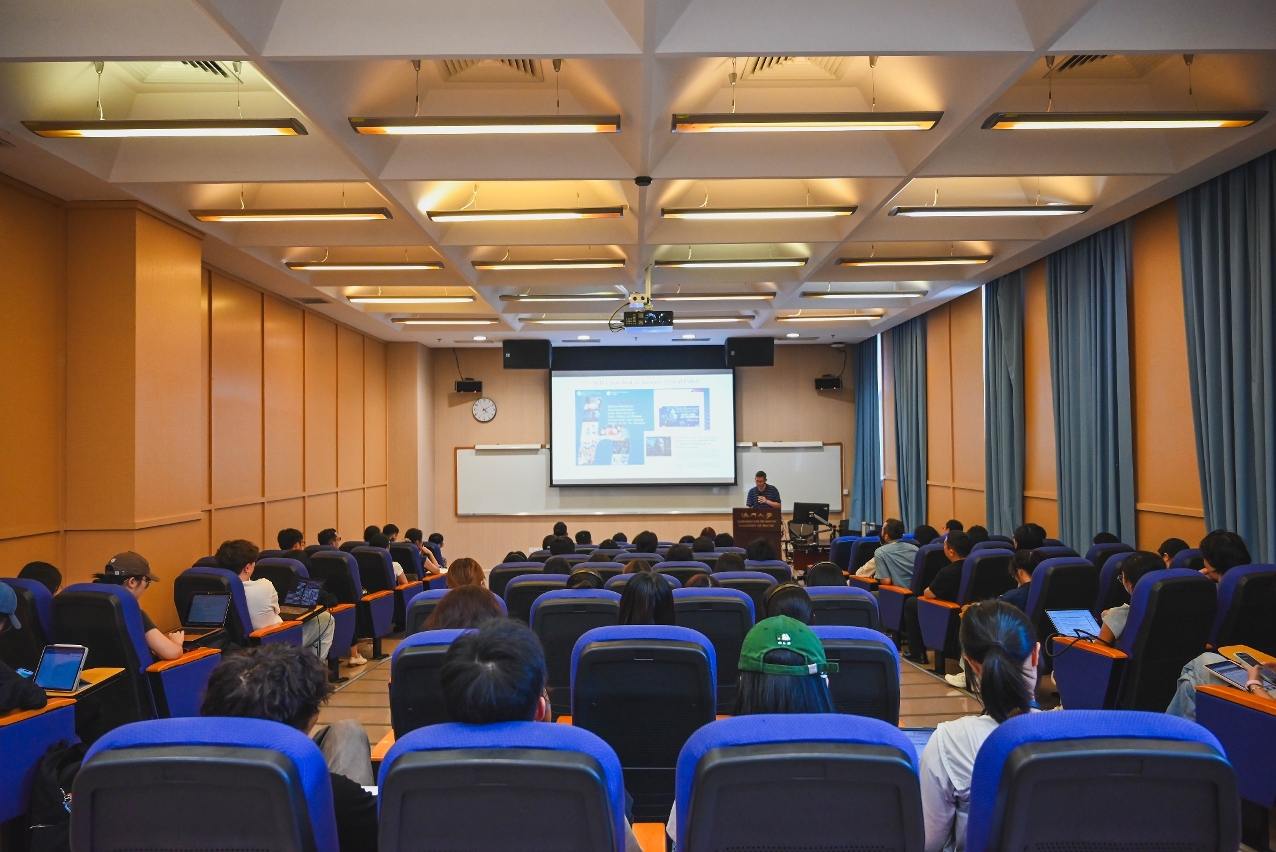
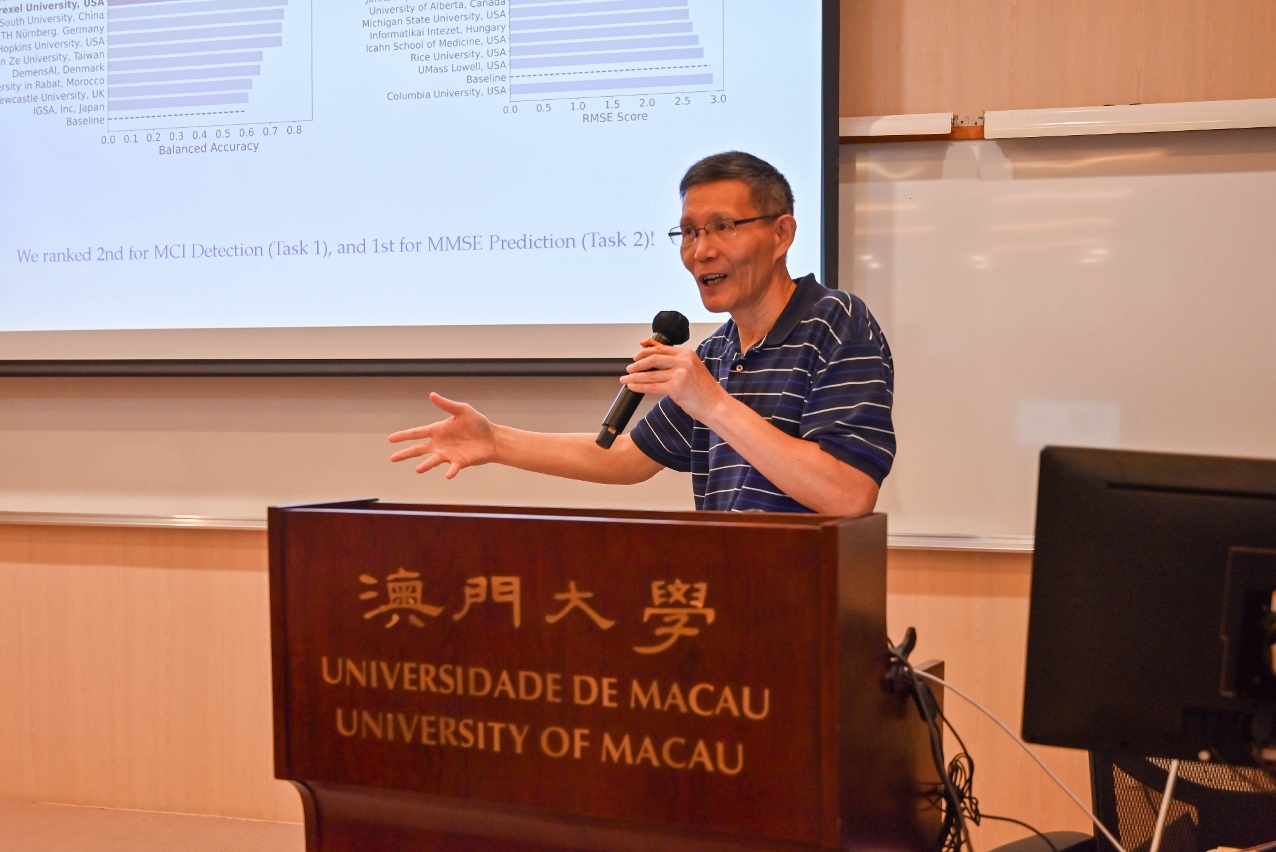
The Faculty of Arts and Humanities (FAH) of the University of Macau (UM) held the Macao Humanities Forum. Liang Hualou, chair professor of neuroscience and artificial intelligence at The Hong Kong Polytechnic University, delivered a lecture titled ‘Transforming Humanities and Healthcare through Artificial Intelligence’. The lecture explored the applications of artificial intelligence (AI) in humanities and healthcare research and drew a large audience of faculty members and students.
In his welcome remarks, Joaquim Kuong, assistant dean of FAH, highlighted that advances in AI offer new tools for research in language, literature, culture, history, and the arts. He noted that researchers can use these tools to analyse large cultural and linguistic corpora and reveal patterns that are difficult to observe, while also paying attention to interpretation and ethical issues. He then introduced Prof Liang’s academic background and research achievements, noting that he has published more than 100 papers in international journals such as Neuron, Proceedings of the National Academy of Sciences, The Journal of Neuroscience, NeuroImage, and Human Brain Mapping. His research on using machine learning methods for the early detection of cognitive decline has also been reported by media outlets including The New York Times.
During the lecture, Prof Liang pointed out that AI-related research emphasises ethics, creativity and interdisciplinary collaboration, and discussed how AI is being applied in research concerning language neuroscience, education, and communication. He then introduced his team’s use of large language models to analyse transcribed speech, identify linguistic features associated with Alzheimer’s disease, and investigate the potential of using these features to detect the disease at an early stage. The research was based on speech and text data obtained from participants describing pictures. Through data processing and model analysis, the team attempted to identify differences in language expression between healthy controls and patients with Alzheimer’s disease. The results showed that using text embeddings generated by large language models in subsequent machine learning analysis yielded better performance than conventional acoustic feature-based methods in the detection of Alzheimer’s disease and the prediction of cognitive test scores. Prof Liang also explained that his team is studying newer models, different languages and different data sources, as well as exploring the integration of multimodal data and multi-agent collaboration, with the aim of assisting clinicians in making comprehensive judgements.
During the Q&A session, attendees raised questions about updates to large language models, collaboration between AI and clinicians, and the ability of the models to distinguish between different types of dementia and infer possible underlying mechanisms. Prof Liang responded to questions about relevant research directions and applications, noting that his team is exploring the use of large language models to classify dementia types and infer related mechanisms.
This lecture marked the first lecture of the Macao Humanities Forum for the 2026/2027 academic year. Each academic year, the forum invites renowned scholars from different humanities disciplines to share their latest research findings with faculty members and students in Macao. Past forums have covered a wide range of fields, including literature, linguistics, history, translation, and the arts.