

‘Tang Shu-wing is one of the most creative and dynamic Chinese theatre directors of his generation’ – Courrier International
Nanyin is a long-lived traditional art form whose repertoire and practices are traced back to ancient strands of Chinese music. Building on its millennial history, Cantonese nanyin emerged as a distinctive musical style that flourished in Southern China during the late Qing Dynasty. Similarly, jazz rose to prominence around the same era in New Orleans. Despite their distinct Eastern and Western roots, both nanyin and jazz serve as genuine folk-art expressions, channelling deep human emotions through melodic storytelling.
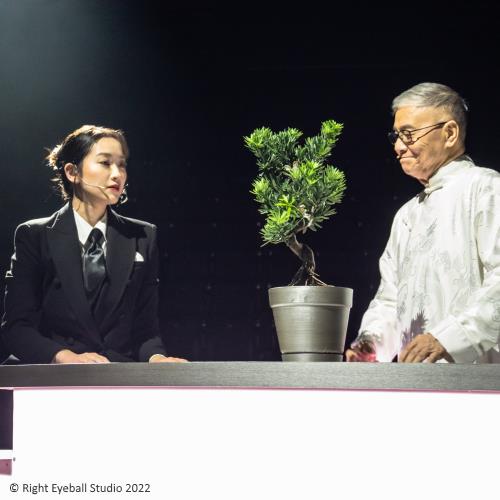
Premiered nearly two years ago, on 14 October, 1014 tells the story of a couple who undergoes a transformative procedure, implanting a chip that erases a painful memory, replacing it with an imagined joyful experience. However, an unsettling situation looms large. How will this couple navigate the impending turmoil? While technology offers allure, can superficial happiness truly mask profound human feelings? Perhaps only time will tell.
Directed by multi-awarded Hong Kong theatre master Tang Shu-wing, 1014 examines the cultural significance of two diverse musical genres. Skilfully, it also explores the poignant ways Chinese artists across generations draw on these genres to convey humanity’s hopes and uncertainties.
Artistic Director and Director: Tang Shu-wing
Playwright: Jim Hui
Music Director, Composer and Lyricist: Daniel Chu
Nanyin Music Director and Nanyin Libretto: Yuen Siu-fai
Performers: Yuen Siu-fai and Ashley Lin
Approximately 1 hour and 10 minutes, without interval
Performed in Cantonese, with surtitles in Chinese and English
Suitable for audience aged 13 or above. Children under the age of 6 will not be admitted
1014 – Nanyin x Jazz