

Macao SAR Government Portal
News
IFT students apply store design and visual merchandising knowledge to help local business
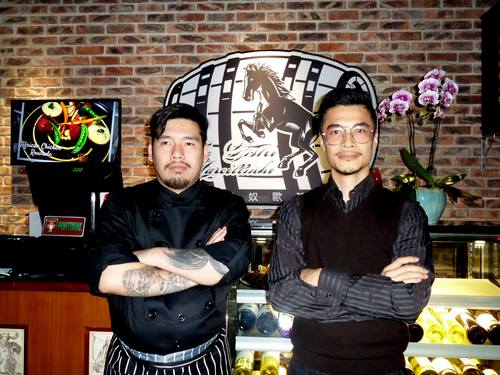
IFT Tourism Retail and Marketing Management year 4 students successfully completed a Visual Merchandising and Store Design project to help a newly opened restaurant called Le Bistro Marcellinho founded by Roberto Souza. The ultimate aim for the project is to help the restaurant to develop ways to utilise its space by proposing ideas and new business models to help the company to develop new revenue stream and/or to drive in more locals and tourists into the restaurant. Students engaged in market research, development of moodboard, design concepts, prepared 3D models and floorplans as well as design illustrations. To enhance the quality of this course, the course instructor has invited local experts Simon Kwong, João Ricardo Lao, Clement Cheng, Selma Branco Cheng and Elvis Wong, who came to the classroom to share their experiences about store design and visual merchandising. The growth of the retail industry in Macao is making every aspect related to running a successful retail business highly important. The course aims to inform students the importance of store design and visual merchandising to enhance customers experience as well as to entice them to visit the store and to encourage purchases. The course instructor Dr. Fernando Lourenço and the founder of Le Bristo Marcellinho congratulate the students for their efforts and for the quality of work they produced. The project is a fantastic way to build a stronger link with the industry by offering supports to local enterprises as well as allow students to gain experiences. For more information about the projects, please check out YouTube channel at http://www.youtube.com/user/iftdesigncourses. The Institute for Tourism Studies, Macao (IFT) was established in 1995, and offers the most extensive range of tourism and hospitality-related bachelor degree programmes in Macao. Annually, approximately 20,000 participants attend its vocational and professional training courses. IFT collaborates with 101 universities and tourism organisations around the world, and has strong links with 500 leading tourism and hospitality corporations worldwide that provide internship opportunities to IFT students. IFT was the first institution to be accredited by the UNWTO.TedQual Certification System for tourism education, and now has 8 bachelor degree programmes with this certification. Currently, the Institute has the greatest number of bachelor degree programmes certified under that system of any tertiary education establishment worldwide. IFT has received the Medal of Merit in Tourism from the Macao SAR Government, and has twice won the Gold Award in ‘Education and Training’ from PATA.
…
Video on Macao’s World Heritage now available
The Historic Centre of Macao was inscribed in 2005 on the World Heritage List of the United Nations Educational, Scientific and Cultural Organization (UNESCO). The city’s unique features and harmonious integration of Chinese and Portuguese cultures have since been gradually getting more attention from the public. Featuring a total of 22 main buildings and additional public spaces, the Historic Centre of Macao stands today as a living testimony of eastern and western aesthetics that have influenced Macao over the past four hundred years. The Historic Centre of Macao encompasses the old city centre, where the Portuguese community inhabited, and extends to the neighbouring squares and streets, covering the following attractions: Senado Square, “Leal Senado” Building, Holy House of Mercy, St. Dominic’s Church, Mount Fortress, Section of the Old City Walls, Na Tcha Temple, Cathedral, St. Augustine’s Church, St. Augustine’s Square, Dom Pedro V Theatre, Sir Robert Ho Tung Library, St. Lawrence’s Church, St. Joseph’s Seminary and Church, Moorish Barracks, St. Anthony’s Church, A-Ma Temple, Mandarin's House, Lou Kau Mansion, Sam Kai Vui Kun (Kuan Tai Temple), Casa Garden, the Protestant Cemetery, Lilau Square, Guia Fortress (including Guia Chapel and Guia Lighthouse), and Ruins of St. Paul’s. To visually enjoy and explore the Historic Centre of Macao, please watch “Macao’s World Heritage”, the latest production from the Government Information Bureau. The video is available at the Bureau’s Youtube channel: www.youtube.com/user/macaogcs
Foreign exchange reserves and nominal effective exchange rate index for the pataca – November 2016
The Monetary Authority of Macao announced today that the preliminary estimate of Macao SAR’s foreign exchange reserves amounted to MOP151.4 billion (USD18.95 billion) at the end of November 2016. The reserves decreased by 1.9% from the revised value of MOP154.4 billion (USD19.33 billion) for the previous month. Macao SAR’s foreign exchange reserves at end-November 2016 represented 11 times the currency in circulation or 94.8% of Pataca M2 at end-October 2016. The trade-weighted effective exchange rate index for the pataca rose 1.63 points month-to-month and 1.40 points year-on-year to 108.54 in November 2016, implying that overall speaking, the exchange rate of the pataca advanced against the currencies of Macao’s major trading partners.
…
IFT Café holds “Change of Times – Solo Exhibition by Eric Fok”
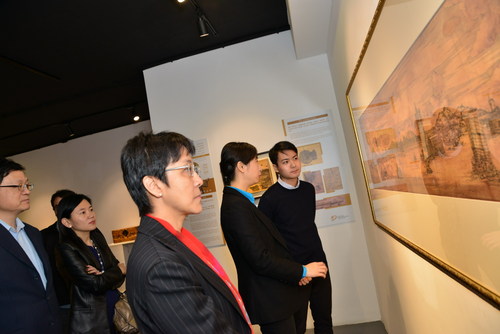
The Institute for Tourism Studies (IFT) has always been committed to promoting the cultural industry in Macao. Apart from constantly providing a variety of cultural and creative courses, IFT has also pursued active cooperation with artists in recent years, organising exhibitions to provide a platform for local artists to demonstrate their artworks and in turn to integrate arts into the daily life of local residents. IFT Café at “Anim’Arte NAM VAN”, is one of the platforms to showcase local arts and provides citizens and tourists with a relaxing dining experience with cultural and art elements. IFT has the honour to invite Mr. Eric Fok to hold “Change of Times” exhibition at IFT Café from 14 December 2016 to 10 February 2017. He uses technical pens in his works, crafting antique-looking maps infused with contemporary elements and buildings, probing the changes wrought on places due to urban development. For centuries, Macao’s Nam Van area was one of the city’s most glamorous bays, the waters dotted with traditional sailing boats. As time passed, a world of change occurred: today’s Nam Van district is physically very different. This exhibition tracks the passage of time in this prime part of Macao, looking for the footprints of its history. The newly established IFT Café not only serves the Institute’s appetising food; but also provides training to IFT students. The outlet additionally operates as a venue to promote culture, and will regularly host exhibitions featuring local artworks. In addition to IFT Café, “Anim’Arte NAM VAN” has many other elements in creativity, leisure and performances for citizens and tourists to experience. The revitalised waterfront includes recreational facilities, shops selling cultural and creative products, a book market, and a weekend craft market. Additionally, the area has regular outdoor performances. At the lake, pedal boats are also available for visitors to ride. Established in 1995, the Institute for Tourism Studies, Macao (IFT) offers the most extensive selection of tourism and hospitality related bachelor degree programmes in Macao, and about twenty thousand participants attend its vocational and professional training courses annually. IFT collaborates with 97 universities and tourism organisations around the world, and builds strong links with 500 leading tourism and hospitality corporations to offer internship opportunities to its students. Being the first institution accredited by the UNWTO.TedQual Certification System for tourism education, IFT has now 8 bachelor degree programmes with the Certification. Currently, the Institute has the most number of bachelor degree programmes certified under the System of any tertiary education establishment worldwide. IFT has received the Medal of Merit in Tourism from the Macao SAR Government, and won twice the Gold Award in ‘Education and Training’ from the Pacific Asia Travel Association (PATA).
…
Macao Special Administrative Region (Macao SAR) and United States of America (US) sign agreement to facilitate compliance with FATCA by financial institutions in Macao SAR
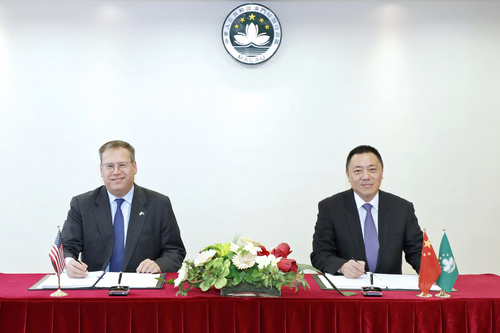
Macao SAR and the US today (14 December 2016) signed an inter-governmental agreement (IGA) that will facilitate compliance with the US Foreign Account Tax Compliance Act (FATCA) by financial institutions in Macao SAR. There are two models of IGAs. A model of 1 IGA essentially requires financial institutions outside the US to report account information of US taxpayers to their own government, which will commit to exchanging such information at a government level with the US IRS on an automatic basis. A model 2 IGA, which Macau SAR and the US have concluded, essentially requires financial institutions to report the relevant account information of US taxpayers to the US IRS directly, supplemented by group requests made by the US IRS, on a need basis, for exchange of information on relevant US taxpayers at a government level. FATCA is an anti-tax evasion regime enacted by the US to detect US taxpayers who use accounts with non-US financial institutions to conceal income and assets from the US IRS. It requires financial institutions outside the US to report financial account information of US taxpayers to the US IRS. Failing this, relevant institutions face repercussions in the form of a withholding tax imposed by the US IRS on relevant US-sourced payments to them. Under the IGA, financial institutions in Macao SAR need to register and conclude separate individual agreements with the US Internal Revenue Service (IRS). Under the agreements, these institutions shall seek the consent of their account holders who are US taxpayers for reporting their account information to the US IRS annually. The IGA reduces reporting burden and facilitates compliance with FATCA by financial institutions in Macao SAR. It covers exemptions for financial institutions or products which present low risks for tax evasion by US taxpayers. The due diligence and reporting requirements under FATCA target specified US taxpayers including US citizens, US resident individuals, and specified entities established in the US or controlled by US persons. Financial institutions are reminded to assess their relevant FATCA compliance implications for their operation and clientele. They shall have the procedures and systems in place to protect clients’ monies, investments or other interests in financial instruments from withholding by third parties; avoid aiding clients to engage in tax evasion locally or overseas; and promote the orderliness of market operation. The two governments were represented by the Secretary for Economy and Finance Mr. Leong Vai Tac, and the Consul-General of the US to Hong Kong and Macau, Mr. Kurt Tong, for the signing of the IGA. The two governments completed the discussions on the substantive terms of the IGA in November 2014. The signing ceremony took place today after the conclusion of the respective formalities. The IGA is available at the website of the Monetary Authority of Macao (www. amcm.gov.mo).
…
Consumer Council released its latest ‘Supermarket price survey’ Surveyed spots included supermarkets in São Lázaro and São Lourenço Parishes
Consumer Council conducted its ‘Supermarket price survey’ in December on 14 December for the implementation of Section 2b), Article 10, Law 4/95/M of 12 June. Surveyed locations included supermarkets in São Lázaro and São Lourenço Parishes. The latest ‘Supermarket Price Survey’ is now available on Consumer Council’s website (www.consumer.gov.mo), ‘Supermarket Price Information Platform’ iPhone and Android apps, and on the Council’s WeChat account page. The survey is also available free of charge at the offices of Consumer Council, IACM’s Iao Hon and S. Domingos Markets, bookstores and libraries. Consumers may also access the resources through WAP channels on their mobile phones. With reference to the local seven parishes and the number of supermarkets in each parish, the Council has divided around 100 supermarkets into 8 areas for price collection. The Council collects prices from these supermarkets for the provision of a more comprehensive database for consumers to check price discrepancies and make price comparisons according to their desired locations. For inquiry, please call 8988 9315.
…
Consumer Council released its latest ‘Supermarket price survey’ Surveyed spots included supermarkets in São Lázaro and São Lourenço Parishes
Consumer Council conducted its ‘Supermarket price survey’ in December on 14 December for the implementation of Section 2b), Article 10, Law 4/95/M of 12 June. Surveyed locations included supermarkets in São Lázaro and São Lourenço Parishes.
…
Press Conference of the exhibition “Flower Vessels from the Palace Museum”
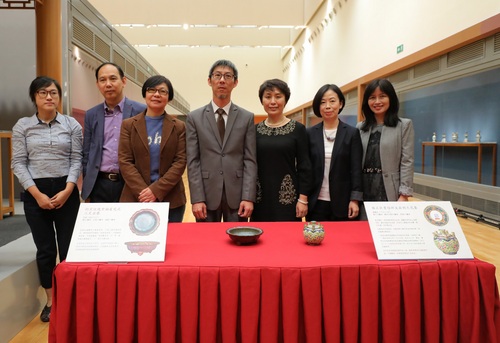
Jointly organised by the Macao Museum of Art (MAM) under the auspices of the Cultural Affairs Bureau, the Palace Museum, the Macao Foundation, the Macao Government Tourist Office and the Macao Daily News, the exhibition “Flower Vessels from the Palace Museum” marks the 18th cooperation between the Macao Museum of Arts and the Palace Museum. Over 100 sets of precious vessels from the Palace Museum closely related to life and the arts will be displayed in this exhibition. In addition, authentic paintings will be exhibited corresponding to the vessels. These paintings demonstrate the usage, styles and taste of various precious vessels from the Palace and the elegance of flowers in the Qing Dynasty. The exhibition will be inaugurated on Friday, 16 December at 6:30pm. The art of Chinese flower arrangement has a long history. The oldest flower vases known are from the Wei, Jin and Southern and Northern dynasties (220-589), later developing through the Song Dynasty (960-1279), Yuan Dynasty (1271-1368), Ming Dynasty (1368-1644) and Qing Dynasty (1644-1912). The use and style of Qing imperial vessels assimilate the essence of the ancient and modern. Not only do the Qing imperial vessels preserve the tradition of religious offering and retain the Chinese intellectuals’ elegant taste but they also develop their own refined characteristics. This exhibition features the history of the development of flower vessels. Visitors can appreciate all kinds of flower vessels from different perspectives while understanding the flower arrangement taste of emperors and empresses such as Emperor Qianlong and Empress Dowager Cixi. This exhibition is divided into three units with six themes, including (1) Functions: “Offering Sacrifice with Fragrant Flowers” and “Leisure Time Enjoyment” in which vessels for planting flowers used in Buddhist ceremonies and ancestors worshiping, and those used for enjoyment in libraries, boudoirs, sitting rooms and yards, among others, are displayed; (2) Styles: “Flower Arrangement and Potted Landscapes” and “Appreciation of Antiquities and Pursuit of Innovation”, in which vessels of different textures for flower arrangement and potted landscapes, and relics used in the Qing imperial palace are displayed; (3) Tastes: “The Great Emperor Qianlong” and “The Elegant Empress Dowager Cixi”, in which calligraphies and paintings by Emperor Qianlong and Empress Cixi, including poems in praise of flower vessels made by imperial order and flower vessels used in the “Da Ya Zhai” (Elegant Studio) and the “Ti He Dian” (Hall of State Harmony) are displayed. This exhibition also displays the corresponding paintings, drawings, and original display images to embody the strict production regulations of imperial vessels, in order to enhance the experience of exhibition-goers. Highlights include the “Scroll of the Life Scenes of Emperor Yongzheng’s Imperial Concubines, Standing in Front of the Mirror Wearing Elegant Clothes” in which a glazed and splendid flower pot, pot saucer and a hand-warmer are portrayed to reveal the combination of flower arrangement (planted), incense and makeup tools in the boudoir, accentuating the aesthetics of the dignified and graceful taste of imperial objects. In the form of lying cattle, the “Shiwan Kiln Moon-White-Glazed Flower Pot in the Shape of a Lying Cattle” showcases how Shiwan kilns incorporated decorative arts with the functions of the objects, by modifying the shape of human, animals, plants and others in order for them to function as practical containers. The “Qianlong Style Enamelled Square Gu Vase with Windowed Patterns of Western Figures” manifests the diversity of the embellishment of craftworks produced in the reign of Qianlong, which extraordinarily features the use of techniques and themes of Western paintings. Not only does it make the works more interesting and ravishing, but it testifies to Western influence in the East. The “Daya Zhai Style Rectangular Flower Pot with Plum Blossom and Paradise Flycatcher Motifs in Chinese Painting on Green Background”, featuring white glaze on its interior surface and bottom, and a scenic illusion painting of plum blossoms and paradise flycatchers with green background on its exterior. The Palace Museum has collected a drawing of this flower pot – a Chinese realistic colour painting. In order to allow the public to experience the exhibition from various perspectives, MAM will organize a series of activities including talks conducted by specialists from the Palace Museum, a demonstration and a workshop of literati flower arrangements, docent services, a mini Chinese music concert, games with prizes, among others. The three talks are “Flower Vessels from the Palace Museum” conducted by Han Gian, Associate Researcher of the Department of Antiquities at the Palace Museum, to be held on 17 December 2016, from 3:00pm to 5:30pm; the “Wall vases from the Qing Court and Others” conducted by Gao Xiaoran, Associate Researcher at the Palace Museum, on 14 January 2017, from 3pm to 5:30pm; and “Craft potted plants in the Qing court”, conducted by Liu Yue, Associate Researcher at the Palace Museum on 15 January 2017, from 3pm to 5:30pm. Registration can be made online or by phone during office hours. Admission is free. In the demonstration and workshop of literati flower arrangements, MAM will introduce the elegant taste and development of literati flower arrangements, enhancing their understanding of how the artistic and practical values of flower vessels coexist in real life. Docent services will be available from 3pm to 4pm on Saturdays, Sundays and public holidays from 7 January 2017. Prizes including MacBook and iPads will be awarded to the winners of the games to be launched next year. Furthermore, MAM will establish outdoor installations introducing the exhibition to the public at Barra Square, Jorge Álvares Square (Nam Van), St. Dominic's Square, Park of Dr. Carlos d'Assumpção and Tap Siac Square. For details and registration methods of the aforementioned events, please visit www.MAM.gov.mo. For enquiries, please call 8791 9814 during office hours. The exhibition “Flower Vessels from the Palace Museum” will be open until 12 March 2017, on the 4th floor of MAM, located at Avenida Xian Xing Hai, NAPE, Macao. The Museum is open from 10am to 7pm (no admission after 6:30pm; closed on Mondays). The press conference of the exhibition “Flower Vessels from the Palace Museum” was held on 14 December, at 4pm, at the auditorium on the first floor of the Macao Museum of Art. The opening ceremony was attended by the Representative of the Cultural Affairs Bureau of the Macao S.A.R. Government and Head of the Department of Exhibitions and Museums, Lei Lai Kio; the Representative of the Palace Museum and Deputy Editor-in-Chief of the Palace Museum Publishing House, Liu Hui; the Vice-President of the Administrative Committee of the Macao Foundation, Zhong Yi Seabra de Mascarenhas; the Chief of the Advertising and Production Division of the Macau Government Tourism Office of the Macao S.A.R. Government, Chen Yuan Yuan; the Deputy Editor-in-Chief of the Macao Daily News, Lio Chi Heng; and the Director of the Macao Museum of Art, Chan Hou Seng, among others.
…
Live poultry sales halted, contingency plan for H7N9 in place
Sales of live poultry in Macao markets have been suspended for at least three days, starting today. The decision was made after authorities had detected the avian influenza virus subtype H7 in chicken samples at the city’s wholesale market yesterday. The contaminated poultry batch did not go to live poultry stalls at local markets, representatives from the Civic and Municipal Affairs Bureau and from the Health Bureau said at a press conference on Tuesday evening (13 December). A 58-year-old man who managed the stall that handled the contaminated poultry at the wholesale market tested positive for avian influenza virus A (H7N9). The patient and his wife – indentified as a close contact of the stall owner – were immediately sent to Conde S. Januário Hospital for treatment and placed under medical surveillance. The patient – Macao’s first confirmed case of human infection with the H7N9 virus – had so far not developed any respiratory symptoms, said the Director of the Health Bureau, Mr Lei Chin Ion, at a separate press briefing held this morning. To safeguard public safety and minimise the risk of spreading of the virus, the Government has culled about 10,000 birds at the Macao Nam Yue Wholesale Market. The action was carried out yesterday evening. A public health contingency mechanism was immediately activated once the virus was detected. It included suspending imports from the suspected farm; and a thorough cleaning and sterilisation of the poultry wholesale market and of all live poultry stalls in local markets. The Health Bureau has already notified the mainland authorities on a mainland driver who had been in close contact with the infected batch of poultry, after it was found the man had already returned to the mainland yesterday. The Government will work closely with health authorities in the mainland – including from neighbouring cities – and will keep in close contact with the World Health Organization, in order to prevent and control spreading of the virus in Macao. Members of the public are urged to remain vigilant and to take heed of the following measures regarding avian influenza prevention: - Avoid visiting markets and farms located in areas where cases of avian influenza virus A (H7N9) have been detected; - Avoid contact with poultry and other birds, and their droppings; in case of contact, thoroughly wash hands with soap and water; - Avoid buying birds that have not passed through quarantine inspections; - Poultry and eggs should be thoroughly cooked before eating; - Wash hands frequently with soap and water; and - Wear masks when respiratory symptoms such as fever and cough develop, and seek medical treatment immediately.
…
Live poultry sales halted, contingency plan for H7N9 in place
Sales of live poultry in Macao markets have been suspended for at least three days, starting today. The decision was made after authorities had detected the avian influenza virus subtype H7 in chicken samples at the city’s wholesale market yesterday.
…