

Macao SAR Government Portal
News
Almost 100 teachers and students attended workshop for consume study award
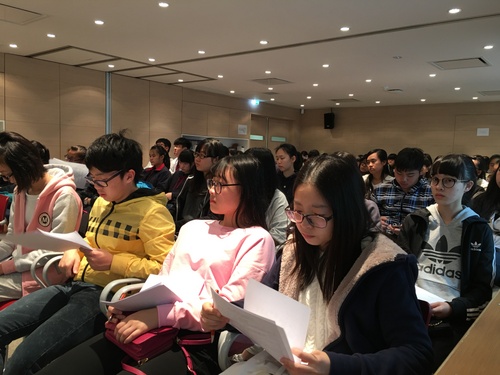
Thirty-seven teams enter the second stage of the consumer study award (Year 2016/2017) held by Consumer Council. A workshop was held earlier by the Council to provide suggestions and encourage students to complete their research reports through practices and experiences. Thirty-two teams from senior high schools and five teams from junior high schools are qualified for the second stage of the consumer study award, participating students are required to collect data, inspect, and make research to complete their reports. Workshops are held by Consumer Council and individual sessions are offered to students to assist them during the course of their work. Almost one hundred teachers and students attended the workshop for the consumer study award (Year 2016/2017), which was hosted by an instructor with over twenty years of experience in conducting consumer study award. The workshop was held in a Q&A format to enhance students’ knowledge in topic research, individual sessions were also available for the instructor to know more about the ideas of the students so that suggestions could be given. The consumer study award is an educational activity using daily consumption behaviours as the research topic, it aims to encourage students to get involved in social affairs through practices and experiences, to discover the consumption phenomenon of Macao and to reflect on the meaning of values. Topics included in the proposal submitted include consumers’ choices, the quest of famous brands, trends, and environmental protection, etc., which all reflect the growth mindset of nowadays’ teenagers and help the Council to deepen its research and develop consumer education in schools. The research project is crucial in students’ experience learning and serves to build up healthy consumer values and civil responsibility in their minds. The number of participating teams of this year’s consumer study award has increased, which shows that local schools are now paying more attention to this project. The last stage of the project, which includes a session that allows winning students to gather together and turn their projects into video clips, brings students to another level of experiences. The Chinese Educators Association of Macau, Macau Catholic Schools Association, Macao New Chinese Youth Association, and Associate Professor of Faculty of Education, University of Macau, Vong Sou Kuan Ph.D. have been invited to form a jury together for the research project. The Council hopes that local schools and organizations will continue to support the consumer study award project.
…
Secretary Leong co-chairs EU-Macao Joint Committee meeting in Belgium
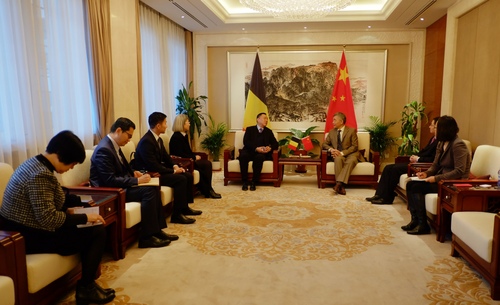
The Secretary for Economy and Finance, Mr Leong Vai Tac, briefed representatives from the European Union on Macao’s latest economic developments, including the Government’s first-ever Five-Year Development Plan. The briefing took place in Brussels, Belgium on Monday (5 December) during the 21st EU-Macao Joint Committee meeting, which was co-chaired by the Managing Director of the European External Action Service for Asia and the Pacific, Mr Gunnar Wiegand, and Mr Leong. During the meeting, both sides updated each other on the latest developments of their economies and exchanged views on several issues. Topics discussed included: taxation; legal cooperation; and the Government’s current procurement system. The two sides agreed to strengthen cooperation in priority fields of mutual interest, such as legal training, interpretation and translation training, research and innovation, combating human trafficking, as well as environment protection. Regarding tax policies, the EU welcomed Macao’s commitment to implement an automatic system for information exchange in 2018, and Macao’s recent decision to join the Base Erosion and Profit Shifting (BEPS) Inclusive Framework. On EU-Macao cooperation, both sides welcomed the smooth progress of the Third Macao-EU Co-operation Programme in the Legal Field, aimed at promoting the modernisation and development of Macao’s legal system. The European Union and the Macao SAR noted that the “EU-Macao Collaboration Scheme for Research and Innovation" – co-funded by the two sides – would encourage Macao researchers to take part in the EU’s Horizon 2020 research and innovation programme. The two sides additionally agreed to explore cooperation on environment and green technology, particularly during the Macao International Environmental Co-operation Forum and Exhibition (MIECF). During the meeting, the EU and Macao representatives agreed to continue the training programme in conference interpretation and translation in Chinese and Portuguese in order to meet the demand of the EU and of Macao for qualified interpreters for both languages. The two sides also agreed to strengthen exchanges by establishing a regular dialogue in order to support development of the increasing role of the EU businesses operating in Macao. In addition, Secretary Leong briefed the EU officials about the first ever Five-Year Development Plan for Macao – a blueprint for the city’s socio-economic development spanning the period 2016 to 2020 inclusive. The Plan highlights the Government’s administrative efforts to: achieve Macao’s moderate economic diversification; position the city as a world centre of tourism and leisure and as a commercial and trade cooperation service platform between China and the Portuguese-speaking countries (collectively known as the “Centre and Platform” policies), as envisaged under the country’s 13th Five-Year Plan; and contribute to the development of the Silk Road Economic Belt and the 21st-Century Maritime Silk Road (collectively known as “Belt and Road” initiative) Monday’s meeting was the 15th annual meeting since China’s resumption of the exercise of sovereignty over Macao. The previous EU-Macao Joint Committee meeting was held in Macao on 5 December 2015. The annual bilateral meeting is in accordance with Article 16 of the EC-Macao Trade and Co-operation Agreement, signed on 15 December 1992. Other Government officials attending the meeting in Brussels included: the Director of the Macao Economic and Trade Office to the European Union in Brussels, Ms O Tin Lin; the Director of the Macao Economic Services, Mr Tai Kin Ip; Executive Director of the Macao Trade and Investment Promotion Institute, Ms Gloria Batalha Ung; and several representatives from, respectively, the Office of the Secretary for Economy and Finance, the Office of the Secretary for Security, the Science and Technology Development Fund, the Financial Services Bureau, the Legal Affairs Bureau, the Public Administration and Civil Service Bureau, and the Macao Economic Services. While in Brussels, Secretary Leong also met with the Ambassador Extraordinary and Plenipotentiary of the People's Republic of China to the Kingdom of Belgium, Mr Qu Xing, to exchange views on economic development and cooperation. Following the official visit to Brussels, Mr Leong headed to Lisbon, Portugal. While there, he is scheduled to meet with officials from the Portuguese Government. Mr Leong will also attend events related to a memorandum of understanding on promotion of entrepreneurship and economic and business cooperation, signed in Macao during the 5th Ministerial Conference of the Forum for Economic and Trade Co-operation between China and Portuguese-speaking Countries (Macao). Mr Leong will return to Macao on Thursday (8 December).
…
Secretary Leong co-chairs EU-Macao Joint Committee meeting in Belgium
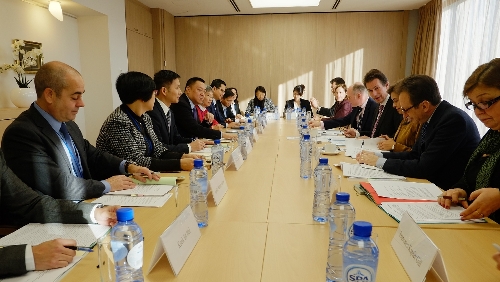
The Secretary for Economy and Finance, Mr Leong Vai Tac, briefed representatives from the European Union on Macao’s latest economic developments, including the Government’s first-ever Five-Year Development Plan. The briefing took place in Brussels, Belgium on Monday (5 December) during the 21st EU-Macao Joint Committee meeting, which was co-chaired by the Managing Director of the European External Action Service for Asia and the Pacific, Mr Gunnar Wiegand, and Mr Leong. During the meeting, both sides updated each other on the latest developments of their economies and exchanged views on several issues. Topics discussed included: taxation; legal cooperation; and the Government’s current procurement system. The two sides agreed to strengthen cooperation in priority fields of mutual interest, such as legal training, interpretation and translation training, research and innovation, combating human trafficking, as well as environment protection. Regarding tax policies, the EU welcomed Macao’s commitment to implement an automatic system for information exchange in 2018, and Macao’s recent decision to join the Base Erosion and Profit Shifting (BEPS) Inclusive Framework. On EU-Macao cooperation, both sides welcomed the smooth progress of the Third Macao-EU Co-operation Programme in the Legal Field, aimed at promoting the modernisation and development of Macao’s legal system. The European Union and the Macao SAR noted that the “EU-Macao Collaboration Scheme for Research and Innovation" – co-funded by the two sides – would encourage Macao researchers to take part in the EU’s Horizon 2020 research and innovation programme. The two sides additionally agreed to explore cooperation on environment and green technology, particularly during the Macao International Environmental Co-operation Forum and Exhibition (MIECF). During the meeting, the EU and Macao representatives agreed to continue the training programme in conference interpretation and translation in Chinese and Portuguese in order to meet the demand of the EU and of Macao for qualified interpreters for both languages. The two sides also agreed to strengthen exchanges by establishing a regular dialogue in order to support development of the increasing role of the EU businesses operating in Macao. In addition, Secretary Leong briefed the EU officials about the first ever Five-Year Development Plan for Macao – a blueprint for the city’s socio-economic development spanning the period 2016 to 2020 inclusive. The Plan highlights the Government’s administrative efforts to: achieve Macao’s moderate economic diversification; position the city as a world centre of tourism and leisure and as a commercial and trade cooperation service platform between China and the Portuguese-speaking countries (collectively known as the “Centre and Platform” policies), as envisaged under the country’s 13th Five-Year Plan; and contribute to the development of the Silk Road Economic Belt and the 21st-Century Maritime Silk Road (collectively known as “Belt and Road” initiative) Monday’s meeting was the 15th annual meeting since China’s resumption of the exercise of sovereignty over Macao. The previous EU-Macao Joint Committee meeting was held in Macao on 5 December 2015. The annual bilateral meeting is in accordance with Article 16 of the EC-Macao Trade and Co-operation Agreement, signed on 15 December 1992. Other Government officials attending the meeting in Brussels included: the Director of the Macao Economic and Trade Office to the European Union in Brussels, Ms O Tin Lin; the Director of the Macao Economic Services, Mr Tai Kin Ip; Executive Director of the Macao Trade and Investment Promotion Institute, Ms Gloria Batalha Ung; and several representatives from, respectively, the Office of the Secretary for Economy and Finance, the Office of the Secretary for Security, the Science and Technology Development Fund, the Financial Services Bureau, the Legal Affairs Bureau, the Public Administration and Civil Service Bureau, and the Macao Economic Services. While in Brussels, Secretary Leong also met with the Ambassador Extraordinary and Plenipotentiary of the People's Republic of China to the Kingdom of Belgium, Mr Qu Xing, to exchange views on economic development and cooperation. Following the official visit to Brussels, Mr Leong headed to Lisbon, Portugal. While there, he is scheduled to meet with officials from the Portuguese Government. Mr Leong will also attend events related to a memorandum of understanding on promotion of entrepreneurship and economic and business cooperation, signed in Macao during the 5th Ministerial Conference of the Forum for Economic and Trade Co-operation between China and Portuguese-speaking Countries (Macao). Mr Leong will return to Macao on Thursday (8 December).
…
Macao’s basic education system is of good quality and equity, and students are high-performing in the three core literacies
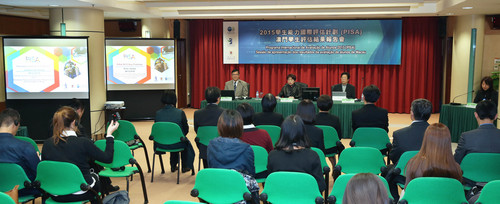
Macao, special administrative region of People’s Republic of China participated in Organisation for Economic Co-operation and Development’s (OECD) Programme for International Student Assessment (PISA) for the first time in 2003. Since then, Macao participated in this three-yearly programme in 2006, 2009, 2012 and 2015. In 2018, Macao will participate for the sixth time. PISA2015 examined the effectiveness of the basic education of all the 15-year-old secondary students born in 1999. The majority of these students were studying in Form 3 and 4 (Grade 9 and 10). For the first time, Grade 10 was the modal grade of the 15-year-old students, and the percentage of students studying in Grade 10 exceeded half of the total sample of Macao’s 15-year-old school population. This finding suggests that Macao is successful in reducing the rate of the grade repetition in its basic education system. In each PISA cycle, three core literacies are assessed, namely, reading, mathematical and scientific literacy. The main focus of PISA2015 was on the assessment of scientific literacy. Amongst the 72 countries/economies participated, Macao is high up in the PISA2015 league table of literacy performance: ranked sixth in scientific literacy (score= 529), twelfth in reading literacy (509), and third in mathematical literacy (544). See Table 1 for details. Scientific literacy consists of three subscales, i.e. Explaining phenomena scientifically, Evaluating and designing scientific enquiries, Interpreting data and evidences scientifically. Macao is high up in the league table of performance of the three scientific literacy subscales: ranked seventh in Explaining phenomena scientifically (score= 528), sixth in Evaluating and designing scientific enquiries (525), and fifth in (532). Amongst the three reported subscales of scientific literacy, Macao students’ performance is best in Interpreting data and evidences scientifically. Students generally are quite good at analyzing data and evaluating evidences presented in various formats, and proposing appropriate scientific conclusions. Comparing the findings of PISA2015 with PISA2006, PISA2015 reveals that Macao students’ scientific literacy performance has been increasing steadily. More than 90% of Macao students reach the baseline level of the overall scientific literacy performance scale. At the same time, the proportion of students who are able to reach the medium or high level of performance has also increased. Admittedly, there is gender difference in scientific literacy performance. In PISA2015, females outperformed males to a significant extent. One minor focus of PISA2015 is on the assessment of mathematical literacy. In PISA2015, Macao students’ performance is the best amongst all previous cycles of PISA. Not only percentage of students attaining medium level or above has increased considerably, but also those attaining below baseline level has decreased appreciably. However, comparing with previous cycles of PISA assessment, females’ progress in mathematical literacy performance is greater than that of the males. In each of the previous cycles of PISA assessment (i.e. from PISA 2003 to PISA2012), there are considerable improvement in mathematical literacy performance for the females than the males. In PISA2015, females start to outperform males in mathematical literacy. Another minor focus of PISA2015 assessment is on the assessment of reading literacy. In PISA2015, Macao students’ reading literacy performance was found to have improved considerably. Percentage of students reaching medium or high levels of reading performance has increased, whereas those not attaining the baseline level has decreased. Macao males come closer to the average of the OECD countries. However, there is still great room for the improvement of gender difference in reading literacy favoring the females, which for the first time is greater than the average of the OECD countries. Same as previous cycles of PISA assessment, the impact of economic, social and cultural status (ESCS) on literacy performance is also one of the weakest amongst the 72 participating countries/economies. The slopes of the ESCS gradient lines are all also very gentle. Not only the share of low-performing students in the student population is one of the lowest, but also the share of academic resilient students in the student population is one of the highest amongst all participating economies in PISA 2015. Range of student performance at both high and low ends of the literacy continuum, as well as both the magnitude of between- and within-school variances are small enough that are indicative of a homogeneous school population. In a nutshell, Macao’s education system is not only of very good quality, but also of very high equity. High level of science and technology is of paramount importance raising the economic development of countries/economies in the 21st century. Cultivation of talents who are able to take the initiative to innovate and explore in scientific and technological arenas will bring a nation or an economy to new heights. In OECD countries, on average 1/4 of its 15-year-olds anticipate to embark on a career related to science and technology. For Macao, it is 1/5. Also, Macao males are aspiring more than the females to embark on a career related to science and technology. Educational practitioners should reflect on how to assist students to further their study and enter the workplace smoothly. There are fervent needs to foster 21st century skills in students so as to meet the challenges of contemporary societies. Based on the plans of students’ career and Macao’s societal development, schools should put forward proposals to cultivate talents who are able to play prominent roles in the society. Education policies should pay due attention to individual differences manifested in the school population. There are needs to initiate plans to help males to study effectively. Pastoral care needs to be strengthened, and academic support rendered to students at the full range of the ability continuum should be increased. Regarding this, plans with a focus on individually configured education should be furnished, so that students’ inner potentials can be maximized. There are needs to pay due attention to the education of the males, so that alongside with the females they collaborate to raise the overall quality of Macao’s basic education system. Macao ranks amongst the leading positions amongst 72 countries/economies in the various league tables of literacy performance in PISA2015. The results showed that Macao’s basic education system has made considerable progress since Macao’s return to its motherland in 1999. The success of Macao in PISA2015 is mainly due to that its basic education system is able to increase the proportion of students with middle/high proficiency levels in the three literacy domains, as well as to reduce the share of low-achievers who are below the baseline level of literacy performance. See Figure 1 for details.
…
Artists in Macao talk about their survival and development in the eighteenth issue of C2
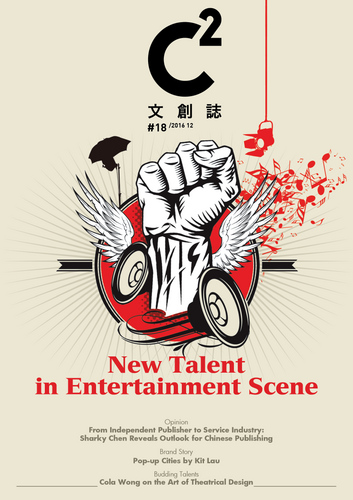
Published by the Cultural Affairs Bureau and produced by 100 Plus Cultural Creative Development Ltd., the eighteenth issue of the C2 magazine will be launched on 7 December (Wednesday). In recent years, budding artists in the show business industry in Macao have more opportunities to present their works to the world. In order to explore the survival and development in this industry, local artists are invited to share their careers, their dreams, and the opportunities available in the industry in this issue. In the section “Feature”, singers like Germano Guilherme who is Macanese (nicknamed “One Million Stars Eurasian”), Vivian Chan who made her name in Hong Kong, singer and talent agent Hyper Lo, talk about the current state of the music industry in Macao and analyse the differences between the markets in Hong Kong and Macao. They also talk about the hurdles Macao artists have to overcome in their career paths. Like Entertainment & Productions, a Macao talent agency, remarks that integrating creation into the new media will provide more opportunities to artists. In the column “Opinion”, independent publisher Sharky Chen talks about the future of the publishing industry in the Chinese market, and analyses how social media brings challenges and opportunities to writers. In “Brand Story”, Hong Kong pop-up book artist Kit Lau shares how his popular Hong Kong Pop Up series documents the typical culture of the Hong Kong and other places in an interesting and creative way and how it is welcome by the readers. In “Budding Talents”, set designer Cola Wong who studied stage design in the United Kingdom and Taiwan talks about her learning experiences in these two places, as well as the development of stage design in Macao. “Blogs” columnists, Joe Tang, Ho Ka Cheng, Yi-Hsin Lin, Yap Seow Choong, Ron Lam, Ashley Chong and Cheong Sio Pang continue to share their unique perspectives on the development of the cultural and creative industries. C2 is a trilingual magazine (in Chinese, Portuguese and English). Readers are welcome to browse or download the magazine at www.c2magazine.mo. C2 is a bimonthly magazine and issue on the first Wednesday every two months. The next issue will be launched on 1 February 2017. Besides, the email subscription function is now available. Simply click the “subscribe” button on the right-hand side of our webpage and enter your email address to subscribe to C2 magazine and receive regular information about every issue .For the latest updates, you may also visit the magazine’s page on Facebook at www.facebook.com/c2magazine.macau, or on WeChat, by clicking “add friend” and inputting “c2magazine” in the ID column. For enquiries, please email to c2magazine.macau@gmail.com.
…
Artists in Macao talk about their survival and development in the eighteenth issue of C2

Published by the Cultural Affairs Bureau and produced by 100 Plus Cultural Creative Development Ltd., the eighteenth issue of the C2 magazine will be launched on 7 December (Wednesday). In recent years, budding artists in the show business industry in Macao have more opportunities to present their works to the world. In order to explore the survival and development in this industry, local artists are invited to share their careers, their dreams, and the opportunities available in the industry in this issue.
…
UM to hold Seminar on the Training of Teachers of Portuguese as a Foreign Language on Friday
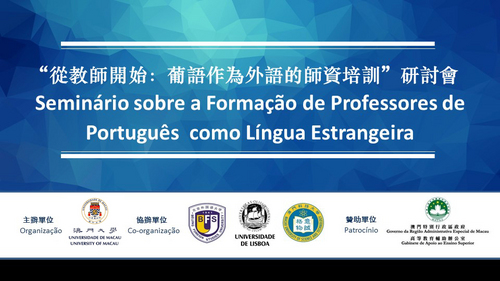
The Seminar on the Training of Teachers of Portuguese as a Foreign Language, organised by the University of Macau (UM), will be held on Friday 9 December. Experts and scholars in the field will gather at UM to discuss strategies for establishing a systematic, professional system for the training of teachers of Portuguese as a foreign language, in order to meet the demand for bilingual professionals in Macao as a bridge between China and Portuguese-speaking countries, and to gradually establish a Portuguese language training centre in the Asia-Pacific region. The following scholars will speak at the seminar. They are Hong Gang Jin, dean of UM’s Faculty of Arts and Humanities; Maria José dos Reis Grosso, associate professor from UM’s Department of Portuguese; Ye Zhiliang, director of the Portuguese Language Teaching and Research Office at Beijing Foreign Studies University (BFSU); Paulo Farmhouse Alberto, dean of the Faculty of Arts at the University of Lisbon (UL); Jorge Pinto, professor from the Faculty of Arts at UL; and Sun Jianrong, dean of the University International College at Macau University of Science and Technology (MUST). Representatives from UM’s Department of Portuguese will present the results of their research project titled ‘Learning Framework for Chinese Students of the Portuguese Language’. Co-organisers of the seminar include BFSU, UL, and MUST. The Tertiary Education Servicess Office of the Macao SAR is the sponsor. The event will begin at 9:30am, on Friday 9 December, in Room G035, Faculty of Arts and Humanities (E21), UM. All are welcome. All participants will receive a certificate of attendance. For enquiries or registration, please call 88228903 or email to fah.portuguese@umac.mo.
…
Consumer Council released latest‘Supermarket price survey’ Surveyed spots included 14 supermarkets in N. Sra. de Fátima Parish
Consumer Council conducted its third ‘Supermarket price survey’ in December on 6 December for the implementation of Section 2b), Article 10, Law 4/95/M of 12 June. Surveyed locations included supermarkets near Iao Hon Market and the Border Gate area (Portas do Cerco ) in N. Sra. de Fátima Parish. The latest ‘Supermarket Price Survey’ is now available on Consumer Council’s website (www.consumer.gov.mo), ‘Supermarket Price Information Platform’ iPhone and Android apps, and on the Council’s WeChat account page. The survey is also available free of charge at the offices of Consumer Council, IACM’s Iao Hon and S. Domingos Markets, bookstores and libraries. With reference to the local seven parishes and the number of supermarkets in each parish, the Council has divided around 100 supermarkets into 8 areas for price collection. The Council collects prices from these supermarkets for the provision of a more comprehensive database for consumers to check price discrepancies and make price comparisons according to their desired locations. For inquiry, please call 8988 9315.
…
Consumer Council released latest‘Supermarket price survey’ Surveyed spots included 14 supermarkets in N. Sra. de Fátima Parish
Consumer Council conducted its third ‘Supermarket price survey’ in December on 6 December for the implementation of Section 2b), Article 10, Law 4/95/M of 12 June. Surveyed locations included supermarkets near Iao Hon Market and the Border Gate area (Portas do Cerco ) in N. Sra. de Fátima Parish.
…
Consumer Council conducts price survey on selling prices of fresh pork and vegetables from Zhuhai, HK, and Macao
For the implementation of Section 2b), Article 10, Law 4/95/M of 12 June, Consumer Council on 6 December collects prices of fresh pork from wet markets and supermarkets for consumers’ reference. The mentioned data collected during 30 November to 6 December are used for comparing the average selling price of the same products from Zhuhai and Hong Kong. The relevant data has been uploaded to the Council’s website for consumers’ reference. The specific price surveys on fresh pork and vegetables are now available on the Council’s website (www.consumer.gov.mo), iPhone & Android ‘Supermarket Price Information Platform’ app, and the Council’s WeChat Account page. The relevant surveys include the average selling prices of local fresh pork and vegetables, and comparison on the respective the average selling prices rom Zhuhai, HK, and Macao. For enquiry, please call 8988 9315.
…