

Macao SAR Government Portal
News
Survey on surcharges of Chinese restaurants included in the latest Consumer Report
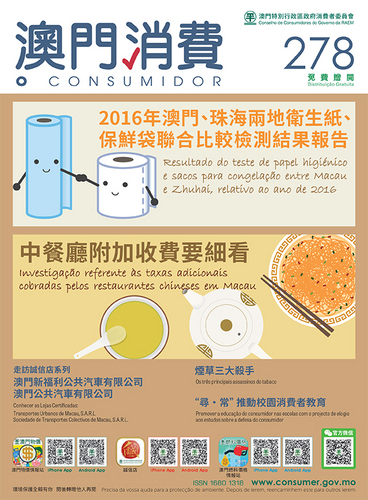
A joint test on tissue papers and cling film by Macao and Zhuhai Consumer Council is now published in the latest issue no. 278 Consumer Report, the magazine also includes a survey on the fees and surcharge of local Chinese restaurants. Consumers may refer to the latest Consumer Report for details. Macao & Zhuhai Consumer Council test tissue papers and cling films Macao Consumer Council and Zhuhai Consumer Council work together to test 20 batches of tissue papers and 16 batches of cling films. All samples tested pass the quoted standards and score good grades in the test. Details of the test can be found in the latest Consumer Report. Consumer Council conducts survey on Chinese restaurants surcharge The Council has received an average of 25 complaint cases each year regarding charges of tea and condiments, surcharge on public holidays, and minimum spending collected by Chinese restaurants in the past three years. A survey asking for all the details of charges has been conducted by the Council, hoping to enhance transparency of the industry. Service charge is the most common Among the almost ninety questionnaires received, all surveyed Chinese restaurants charge consumers different kinds of surcharge in which service charge (mostly ten to fifteen percent) is the most common. About eighty percent of the restaurants have charges of tea, and over fifty percent of the surveyed restaurants charge consumers for corkage. About twenty percent of the restaurants state that they have an extra ten to twenty percent service charge on public holidays, and notices will be prominently displayed at their shops. Different names and charging methods For charges of condiments, snacks, and tissue, etc., different restaurants use different names and charging methods for this kind of surcharge. One restaurant responded that consumers will be charged even if they choose not to have these kinds of products provided. Other restaurants stated that condiments or snacks are not mandatory charged, some restaurants even offer them for free. Consumers are reminded to inquire about the charging method of the restaurant as different calculation result in discrepancies of the final bill. Make inquiry before ordering All restaurants surveyed state that items and amount are clearly listed on the receipt for consumers’ checking, however, Consumer Council believes that it is better to have all prices of food and service charges, especially non-daily ones or any price adjustments of food or services, listed in the menu as well as displayed at the premises to avoid any consumer dispute. For details of the survey, consumer may refer to the coverage in the latest Consumer Report. Special charges or any price adjustments should also be reported to the enforcement department. he current issue of Consumer Report also features interviews of the two companies serving public transportation in Macao, Transmac and TCM. Consumer Report is now available free of charge at the Council (Av. Horta e Costa, N.º 24-A, Edf. Cheung Heng, R/C), and the service counter of the Council at Macao SAR Government Service Centre (Rua Nova da Areia Preta, Nº52), Public Information Centre at Vicky Plaza, libraries and bookstores. Consumers may also access the magazine online on the Council’s official website (http://www.consumer.gov.mo) and WeChat official account. For enquiry, please call 8988-9315.
…
UM students win 7 prizes at China Daily Campus Newspaper Award 2016
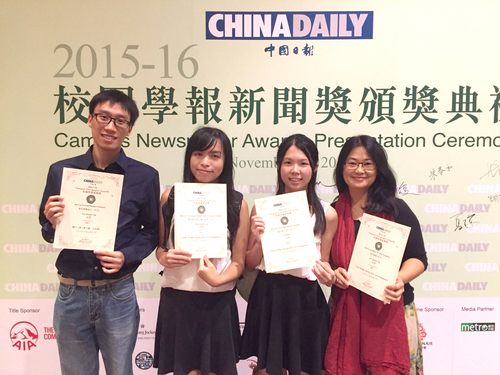
A student team from the University of Macau (UM) Department of Communication won seven prizes at the China Daily Campus Newspaper Awards 2016, for two of their publications, namely Umac Bridges 2016: Art of Happiness, and Communicator 2016. The production team of the 2016 spring issue of Umac Bridges received five prizes in the English category, including a first prize in Overall Design, a first prize in News Page Design for the story titled ‘Treeplets’, a second prize in Headline for the article titled ‘Spilling the Beans: A Look at Coffee Culture’, and a second prize and a third prize in News Page Design (Online Voting) for the stories titled ‘ANIMA: We are Family’, and ‘Treeplets’, respectively. The editorial board of Communicator 2016 received two second prizes, in News Photography, and Overall Design in Chinese, respectively. Both publications were produced by fourth-year students from the Department of Communication, under the guidance of Prof Wu Mei and Dr Che Hio Ieong. Organised by the China Daily Asia Edition, this year’s competition received more than 600 entries from 28 universities. The award ceremony was held at the Hong Kong Convention and Exhibition Centre. UM students Mindy Leung and Charlotte Fung, the editor-in-chief of the two publications Dennis Tam, and Dr Che Hio Ieong from the Department of Communication attended the event.
…
UM to establish Chinese-Portuguese bilingual teaching and training centre
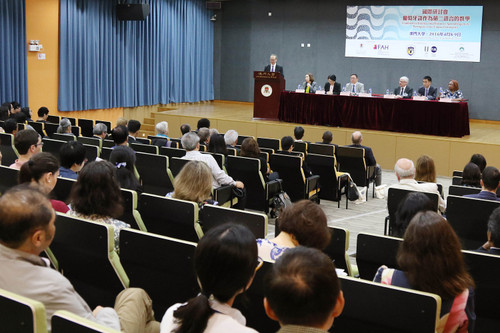
The University of Macau (UM) plans to establish a Chinese-Portuguese bilingual teaching and training centre next spring, in order to promote reform of its Portuguese language programmes, and produce more bilingual professionals to support the SAR government’s effort to ‘build a better Macao through talented people’. The centre plans to devise innovative teaching methods based on the characteristics of Macao students and develop pedagogical models and quality evaluation standards tailor-made for native Chinese-speaking learners. UM’s Department of Portuguese has a culturally diverse faculty team whose members include professors from renowned universities in Portuguese-speaking countries such as Portugal and Brazil, veteran educators fluent in both Chinese and Portuguese, and well-known scholars whose research interests include learning or teaching Portuguese as a second language. With the support of a strong faculty team, the centre will formulate medium- and long-term training plans based on the current situation in Macao. It will improve the university’s Portuguese language curriculum in order to attract more students. Additionally, the centre will launch training programmes for Portuguese language instructors from primary and secondary schools in Macao, as well as those from universities in mainland China. The centre will also collaborate with the Forum for Economic and Trade Co-Operation between China and Portuguese-Speaking Countries (Macao) in offering courses in Chinese language and culture for students from Portuguese-speaking countries, and in providing language support for professional courses taught in Portuguese, such as courses in tourism, business management, and medical sciences. On the teaching material front, the centre will design innovative audio-visual teaching materials that are more suited to Macao students, to supplement its existing teaching materials. The centre also plans to establish a reward and monitoring mechanism to improve the current programme that allows students to study in Portuguese-speaking countries, so that participants in the programme will achieve more fruitful outcomes. In addition, the centre will establish partnerships with organisations and companies in Macao and overseas where Portuguese is a working language, so as to create more internship opportunities for students to practice their Portuguese language skills. The Department of Portuguese is the largest Portuguese teaching body in Asia. Since its establishment, the department has produced many language professionals, who now work in the various departments of the Macao SAR government, as well as companies and higher education institutions in Macao and mainland China. Many of them have become a driving force in their industries.
…
Macao public safety continues to be maintained at a high level
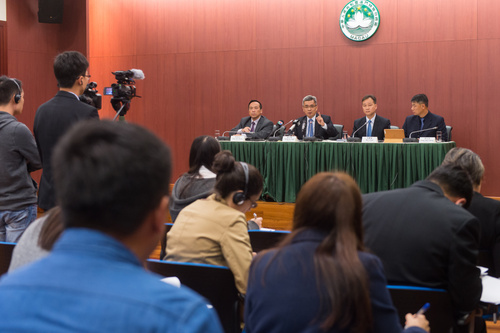
The number of suspected crime cases reported in Macao during the first nine months of 2016 saw a year-on-year rise of 4.6 percent, to 10,826. The police will remain vigilant for signs of any upward trend in the number or types of crime, in order to maintain Macao’s safe environment. Disclosing on Thursday (24 November) the crime case figures for the first nine months of 2016, the Secretary for Security, Mr Wong Sio Chak, said the aggregate increase was believed to be related to strengthened enforcement action against those temporary stay permit holders that failed to report to the authorities on a regular basis as required. In all the suspected criminal cases reported during the nine months to September 30, a total of 5,542 people were transferred to the Public Prosecutions Office for further investigation, an increase of 1,343 people, or 32 percent, on the prior-year period. Suspected cases of violent crime went up by 8.4 percent to 608 cases: nonetheless, some forms of violent crime, such as robbery, recorded a double-digit decrease. The authorities would continue efforts to maintain public order; to use effective crime-fighting measures; and to work closely with the public to safeguard the stability of Macao and to update crime-fighting strategies when deemed necessary, stated the Secretary. The police dealt with a total of 940 suspected cases of pickpocketing, an increase of 12.2 percent from 838 cases from the prior-year period. The rise was mainly due to enhanced enforcement efforts in tourist areas and places with high foot traffic. In addition, there was a total of 1,276 suspected cases of common assault reported in the period. Of these, 275 suspected cases involved incidents among family members, a 36.8 percent rise in such incidents from the prior-year period. Mr Wong said that, following the implementation of the Domestic Violence Law, the police had the full capability to work with the public in order to prevent – and if necessary investigate – domestic violence. Police preparation included training for front-line officers, and the formulation of relevant guidelines and mechanisms. Regarding suspected cases of gaming-related crime, in the first nine months of 2016 the police initiated investigation of 349 cases allegedly involving illegal detention of persons by third parties. This represented a 13.3-percent increase from the 308 cases from the corresponding period last year. Suspected cases of usury, or unlawful lending of money, went up 45 percent, to 348 cases during the first three quarters of 2016. Mr Wong said the police had given close attention to three incidents that occurred during late July and in August concerning the illegal detention of persons by third parties, and that ended in each case with the death of those being illegally detained. The cases were solved quickly and without causing a significant negative impact for society. Mr Wong added that nonetheless the police would remain vigilant and strengthen their law enforcement efforts, in order to foster a healthy development of the city’s gaming industry.
…
Macao public safety continues to be maintained at a high level
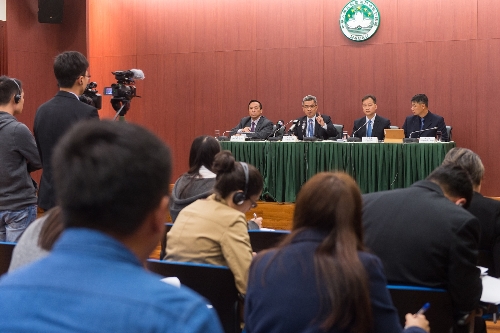
The number of suspected crime cases reported in Macao during the first nine months of 2016 saw a year-on-year rise of 4.6 percent, to 10,826. The police will remain vigilant for signs of any upward trend in the number or types of crime, in order to maintain Macao’s safe environment.
…
UM students receive best paper awards at iFuzzy2016
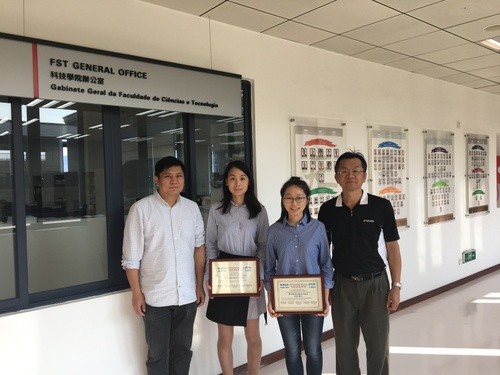
A paper written by PhD student Guo Li and master’s student Wu Yingwen from the Faculty of Science and Technology (FST), University of Macau (UM), received the Best Student Paper Award - First Place and the only Best Paper Award in Theory, respectively, at the 2016 International Conference on Fuzzy Theory and Its Applications (iFuzzy2016). The students’ paper, titled ‘Image Guided Fuzzy C-Means for Image Segmentation’, focuses on image segmentation, a fundamental technique in computer vision that is widely used in vision-based artificial intelligence tasks, as in the case of self-driving cars and medical image understanding. However, images of poor quality like the medical ones obtained via X-Ray or Ultrasound are difficult for computers to analyse. This paper proposes an image segmentation method based on fuzzy theory to solve this problem and increase the computers’ capability to understand low-quality images. The paper is co-authored with FST Assistant Professor Chen Long and Dean Philip Chen. Approximately 100 papers have been presented at this year’s conference.
…
“Macao Light Festival 2016” dazzles Macao with “Treasure of Light” in December Weaves light and music into Stories of Macao Presents fun interactive games for all in town
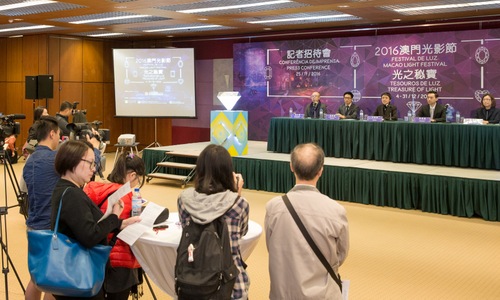
“Macao Light Festival 2016 – Treasure of Light” will come on stage from 4th to 31st December, presenting video mapping projections, light installations, interactive games as well as a music and light show at various locations in Macao. This year, the Festival will introduce innovative projection techniques and new interactive elements, in hope that more citizens and visitors will come to enjoy a more fascinating program of the Festival which promises a more compelling effect as a mega event. The organizer, Macao Government Tourism Office (MGTO), held a press conference today (25 November) to introduce the event program. Civic and Municipal Affairs Bureau, Cultural Affairs Bureau and Sports Bureau are the event co-organizers. MGTO Director Maria Helena de Senna Fernandes and Deputy Director Cheng Wai Tong, Vice President of Sports Bureau, Lau Cho Un, as well as representatives of Cultural Affairs Bureau and Civic and Municipal Affairs Bureau were present in the press conference along with other personages today. Director Senna Fernandes stated that the Macao Light Festival will be inaugurated on 4th December, the same day with the Macao International Marathon and the Parade through Macao, Latin City. During the Macao Light Festival, the city will also celebrate the 17th Anniversary of the Establishment of Macao Special Administrative Region and the Christmas holidays. Through a line-up of mega events, the Government strives to unleash a greater synergy and transform Macao into a City of Events, in line with the city’s goal to become a World Centre of Tourism and Leisure. “As the organizer, MGTO will put unsparing efforts to present a spectacular Macao Light Festival, hoping to set off a mass fervor for the dazzling event again, and forge the Festival into a signature annual event,” she remarked. Remarkable blend of technology and innovation “Macao Light Festival 2016 – Treasure of Light” will be staged from 7 p.m. to 10 p.m. daily from 4th to 31st December. The route covers a total of eight venues including Nam Van Lake Nautical Centre, Avenida Panorâmica do Lago Nam Van, Anim’Arte Nam Van, St. Lawrence’s Church, Mandarin’s House, Lilau Square, Moorish Barracks and Barra Square. Revolving around a quest for the “Treasure of Light”, the Festival invites citizens and visitors to embark on an adventure as “explorers” to look for seven lost Energy Gems of Mazu, which symbolize the meaning of 'Hope', 'Perseverance', 'Health', 'Happiness', 'Harvest', 'Bravery' and 'Faithfulness'. By collecting the seven gems, they can awaken treasure from the sea and enjoy a virtual reality tour beyond their imagination. It is fun for participants, young and old, to enjoy the activities involved. The production team of the Festival this year mainly comprises local teammates and partners from Hong Kong. The entire production features innovative projection techniques of video mapping which is not confined to architecture façade. The video mapping show at Nam Van Lake Nautical Centre will be projected upon a cascade of water. In addition, more interactive elements as well as a new music and light show are included to attract local and foreign spectators. A new mobile application named “Treasure of Light” is launched this year, featuring maps of the covered routes, program, theme game, the latest information and selfie-taking feature. The content of the App is available in Chinese and English. The App can be downloaded by the public for free on App Store or Google Play. Video Mapping illustrates stories about Macao Four video mapping shows namely “Sailing”, “Inheritance”, “Source of Water” and “Carrying-on” will be staged at Nam Van Lake Nautical Centre, Mandarin's House, Lilau Square and Barra Square respectively. The shows will take the audience to travel back into the old days of Macao for its moving stories. The shows are scheduled as follows: 7 p.m., 7:30 p.m., 8 p.m., 8:30 p.m., 9 p.m., 9:30 p.m. and 9:55 p.m. Every show spans 5 minutes. To facilitate the event “Walk for a Million”, the video mapping show and light installation at Barra Square will be temporarily suspended from 10th to 14th December. Light installations shine with new interactive elements Seven sets of light installations in total will be rolled out at various locations, including “Lake of Treasure” comprising 360 LED glow balls at Nam Van Lake Nautical Centre, “Path of Treasure” at Avenida Panorâmica do Lago Nam Van, “Light Painting, Neon Sketching and Street of Illusion” at Anim'Arte Nam Van, “Blessing Stairways” at St. Lawrence's Church, “Tree of Blessing” at Lilau Square, “Cave of Gems” at Moorish Barracks and “Harbor of Hope” at Barra Square. Most of the light installations will shine with new interactive elements. Among them, the “Light Painting” will enable spectators to creative their own graffiti of light and share photos on social network, while “Neon Sketching” will let spectators to sketch their own art pieces of neon light in concert. Creative interactive games add great fun A total of five interactive games with an enhanced level of interactivity will be available in the upcoming Festival. At Nam Van Lake Nautical Centre, “The Tree of Wishes” will enable participants to create their own fireworks through the LED Matrix installed for the video mapping show, whereas the “Romance Detector” at St. Lawrence's Church will combine video mapping effects to bestow blessings of love. For the “Lantern of Wishes” in Mandarin’s House, participants can ride a glowing seesaw to set off projections of blessing lanterns together. For the “Fountain of Light” at Lilau Square, participants can step into a fountain of light and collect gems flying down from the fountain. The public can play the interactive game “Lost Gem” on the mobile app “Treasure of Light” and collect the seven lost gems. They can then activate the collected gems on the game device “Eyes of Treasure” set up at Nam Van Lake Nautical Centre and Barra Square. After activating the seven gems, participants will be able to find the mysterious treasure and embark on a virtual reality tour. In addition, exquisite souvenirs can be redeemed at the two abovementioned locations. The interactive games will be held from 7 p.m. to 10 p.m. except during the video mapping shows. On 24th December, the “Romance Detector” will end earlier at 9 p.m. Music and light show bespokes local artistic power The newest music and light show named “Melody of Light” will come on stage at Anim’Arte Nam Van, where citizens and visitors can find various cultural and creative stores, a craft market and more. In the show, local artists will orchestrate an array of spectacular performances into a symphony of painting art, music and light. The show will demonstrate local artistic power and lead visitors into a local world of cultural and creative art, gracing the Festival with new leisurely experience. The performers will play different styles of music with different musical instruments glittering with glow graffiti painted by a local artist. Spanning 15 minutes, the music and light show will take place every half an hour from 7:30 p.m. to 9:30 p.m, every Friday, Saturday and Sunday during the Macao Light Festival, as well as on 8th, 20th, 21st and 26th December. Last December, MGTO held the inaugural edition of the Macao Light Festival – Journey of Lights. Following the Festival, the Office conducted an impact evaluation of which the result confirmed that the event had widely won recognition from citizens and visitors. A line-up of festive events during last December, including Macao Light Festival, Macao International Marathon and the Parade through Macao, Latin City, had unleashed a synergistic effect and led to growth in various tourism figures. Following that, MGTO staged another widely popular event named “Valentine's Day Fantasia 2016 – The Fairytale of Lights” this February. In the future, MGTO will continue to organize a diversity of mega events to enrich the city’s offer of leisure experiences, while assisting to promote integrated and complementary development of various industries to open up a new landscape for the tourism and leisure industry. In addition, the Office will strive to deepen cooperation across the fields of tourism, culture and sports for a stronger synergy, in hope to attract visitors from various source markets and encourage them to stay longer in Macao. The office will also apply more innovative technology and multimedia in tourism to promote smart tourism development in Macao.
…
Government task group visits Taishan nuclear facilities
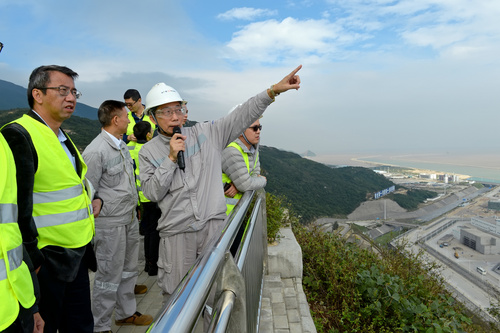
The joint task group for nuclear safety today (Thursday) paid a visit to the nuclear power plant in Taishan Prefecture, Guangdong Province, in order to gain a better understanding of its facilities and how the site has been planned. The plant has not yet started operation, according to information provided to the Government. The Government pays great attention to the public’s interest in safety issues regarding nuclear energy generating facilities located near Macao. It is actively seeking steps to allay any public concern regarding the safety of the Taishan nuclear facility in particular. Today’s visit was led by the Coordinator of the Security Forces Coordination Office, Mr Choi Lai Hang. The visiting group comprised members from a number of public departments and several Macao associations. The visit received support from: relevant ministries and departments of the Central Government; the Guangdong provincial authorities; and the Taishan Nuclear Power Joint Venture Co., Ltd. During the visit, a representative from the company stated the plant had already established an emergency response area as part of its nuclear emergency plan. According to relevant regulations, this area was divided in several zones: a pre-evacuation zone included the area within a five-kilometre radius of the plant; a secondary zone extended to 50 kilometres around the plant, and provisions for this area in case of an unscheduled nuclear event included mostly safety checks on any food produced in the area, and on any water sourced there. The radius of the latter safety zone is in line with the strictest requirements under existing regulations. Were an unscheduled event to occur that was categorised as of the most serious type, there would be no need to evacuate any area outside a 20-kilometre radius of the plant, said the representative. Macao is 67 kilometres away from Taishan. This means no part of Macao would require evacuation even in the case of the most serious category of unscheduled event at Taishan. According a seven-level scale for unscheduled events – as defined by the International Atomic Energy Agency – the first three levels are classified as “incident”, and levels four to seven are defined as “accidents”. In China, there has been no event categorised as more serious than level two. During the visit to the nuclear plant, the representative said the firm would – as always – comply with national laws and standards for developing nuclear power facilities. At the same time, the company pledged to enhance safety management at its facilities and maintain strict quality control regarding the equipment used in the Taishan project, in order to ensure the safety of the nuclear power plant. In addition, the SAR Government was working closely with Guangdong’s Emergency Management Office, regarding the establishment of a mechanism for regular communication between the provincial authorities and Macao. This was in order to facilitate exchanges relating to safety matters and in order better to respond to any public concern. Once the mechanism had been set up, it would facilitate further visits from Macao observers – including various sectors of the community – in order to enhance the public’s understanding regarding development of nuclear power at Taishan. The Government is analysing if there is a need to update Macao’s emergency response measures in order to cope with any possible unscheduled nuclear event in neighbouring areas. In June, the Government invited mainland experts in nuclear energy to Macao, to enable them to provide further details of the construction of the Taishan plant, and to share their knowledge with the public, regarding nuclear safety.
…
UM promotes application of neuroscience in language teaching
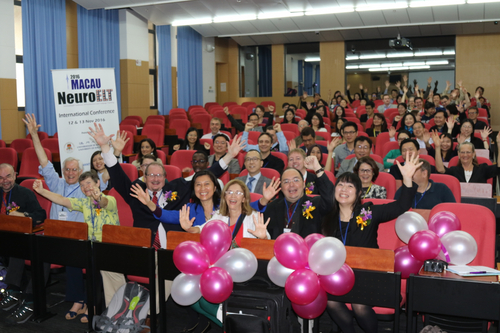
The International NeuroELT Conference: Neuroscience and Language Teaching was recently held at the University of Macau (UM). 128 scholars from Chile, Brazil, Japan, Indonesia, South Korea, the Philippines, mainland China, Hong Kong, and Macao, attended the conference and discussed the relationship between language teaching and the latest developments in educational neuroscience. The theme of the conference, ‘NeuroELT’, means the combination of educational neuroscience and English language teaching. During the conference, Dr Sun Yilin, director of UM’s English Language Centre and president of the TESOL International Association, gave a keynote speech, titled ‘21st Century ELT: Trends, Strategies, and Implications’. The two-day conference included eight main plenaries and presentations. Topics discussed at the conference included NeuroELT pedagogy, neuroplasticity, motivation, movement, collaboration, learning, cognition, and brain-based learning. Invited speakers included scholars in the field of English language teaching, with a focus on mind, brain and education, as well as authors of ELT textbooks. During the conference, a number of PhD students from UM told the participants about a cognition laboratory under the Faculty of Arts and Humanities and presented the lab’s various pieces of equipment, including eye tracking devices and EEGs. They also discussed how the equipment measures language acquisition.
…
UM promotes application of neuroscience in language teaching
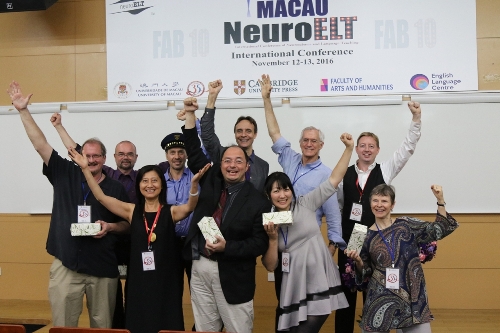
The International NeuroELT Conference: Neuroscience and Language Teaching was recently held at the University of Macau (UM). 128 scholars from Chile, Brazil, Japan, Indonesia, South Korea, the Philippines, mainland China, Hong Kong, and Macao, attended the conference and discussed the relationship between language teaching and the latest developments in educational neuroscience.
…