

Macao SAR Government Portal
News
Consumer Council released latest ‘Supermarket price survey’ Surveyed spots included supermarkets in N. Sra. de Fátima Parish
Consumer Council conducted its latest ‘Supermarket price survey’ in September on 21 September for the implementation of Section 2b), Article 10, Law 4/95/M of 12 June. Surveyed locations included 14 supermarkets in Toi San, Ilha Verde and Fai Chi Kei areas in N. Sra. de Fátima Parish. The latest ‘Supermarket Price Survey’ is now available on Consumer Council’s website (www.consumer.gov.mo), ‘Supermarket Price Information Platform’ iPhone and Android apps, and on the Council’s WeChat account page. The survey is also available free of charge at the offices of Consumer Council, IACM’s Iao Hon and S. Domingos Markets, bookstores and libraries. With reference to the local seven parishes and the number of supermarkets in each parish, the Council has divided around 100 supermarkets into 8 areas for price collection. The Council collects prices from these supermarkets for the provision of a more comprehensive database for consumers to check price discrepancies and make price comparisons according to their desired locations. For inquiry, please call 8988 9315.
…
UM, US National Institutes of Health make progress in research on better treatment for cancer and autoimmune diseases
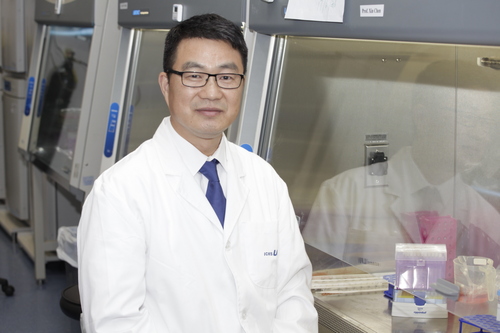
The State Key Laboratory of Quality Research in Chinese Medicine (QRCM Lab), Institute of Chinese Medical Sciences (ICMS), University of Macau (UM), and the National Cancer Institute (NCI), National Institutes of Health in the United States, have made significant progress in a collaborative research project on safer and more effective treatment for cancer and autoimmune diseases. The related findings have been published in scientific journals under Nature magazine. Researchers from UM and the NCI established that TNFR2 (tumor necrosis factor receptor 2) plays an important role in the proper functioning and proliferation of T cells, especially regulatory T (Treg) cells. This finding not only corrects a theoretical misconception in immunology, but also paves the way for developing safer and more effective drugs for tumour and autoimmune diseases. Earlier this month, two papers about the research findings, namely ‘Paradoxical Effects of Targeting TNF Signalling in the Treatment of Autoimmunity’, and ‘TNFR2 Expression by CD4 Effector T Cells Is Required to Induce Full-fledged Experimental Colitis’, were published in Nature Reviews Rheumatology, and Scientific Reports, respectively. UM professor Chen Xin is the first author of both papers. Since its founding, the QRCM Lab has been committed to nurturing collaboration with internationally renowned institutions in scientific research and personnel training. The lab and the NCI have signed a collaboration agreement aimed to promote collaboration in studying the mechanism of action of traditional Chinese medicines in regulating the immune system, which has produced many impactful results. So far scientists from UM and the NCI have co-published seven research papers, in Nature Medicine, Nature Reviews Rheumatology, FASEB Journal, Journal of Immunology, Frontiers in Immunology, Scientific Reports, and Cellular and Molecular Immunology, respectively. More research findings are expected to be published soon.
…
Global Association of the Exhibition Industry issues report on Asia’s 2015 trade fair industry Macao MICE sector maintained steady growth that year
As a leading international group in the exhibition and convention field, UFI, the Global Association of the Exhibition Industry, brings together renowned trade show organisers and exhibition centre operators from around the world. Its main aims are to promote the development of the exhibition industry regionally and globally. Each year, UFI commissions a group of professional consultants to conduct a survey on Asia’s trade fair industry, and publishes an annual report on the sector. This material is an important reference point for international exhibition organisers/exhibition management teams. According to the 2015 report recently released, Macao was one of the smallest trade fair markets in Asia that year, but also has had the shortest development history. Despite the city’s overall economy having been negatively affected in 2015 by the external economic environment, the local trade fair market recorded an increase of 5.9 percent in total net space sold at trade fairs. The rate of growth was higher than the region’s average, which stood at 5.6 percent for the same period. Macao’s 2015 performance came on top of a 2014 rise in the amount of net space leased in the city for such events. In 2015, total trade fair space sold in Macao jumped to 209,250 square metres, an increase of 147.6 percent compared with the 84,500 square metres sold in 2011. This made Macao the Asian trade fair market with the fastest growth during that five-year period, according to the report. UFI’s report highlighted the strong support for the local exhibition industry given by the Macao SAR Government. It also mentioned the importance of ancillary facilities to promote the development of the city’s trade fair industry. For instance, the future Hong Kong-Zhuhai-Macao Bridge will improve regional connectivity; while the number of air connections between Macao International Airport and other Asian cities had steadily increased. Therefore, growth of Macao’s trade fair industry in the coming few years was expected to exceed the regional average, noted the report. The Macao Trade and Investment Promotion Institute (IPIM) officially became a member of UFI in October 2005. IPIM has since then actively participated in UFI’s activities, with a view to enhancing exchanges with relevant international bodies in the exhibition field. IPIM has also launched a “One-stop Service” for MICE Bidding and Support in Macao: it provides comprehensive services to assist convention and exhibition organisers interested in running events in the city, aiming to attract and introduce renowned overseas events to Macao.
…
Consumer price index (CPI) for August 2016
Information from the Statistics and Census Service (DSEC) indicated that the Composite CPI rose by 1.65% year-on-year to 108.10 in August 2016, a further decrease of 0.43 percentage points from the 2.08% growth in July. The increment was attributable to dearer rentals for parking spaces, higher charges for eating out, as well as increases in property management fees and motor car prices. Among the various sections of goods and services, price index of Food & Non-Alcoholic Beverages that accounted for the largest share of household expenditure showed continued slowdown in growth, rising by 2.09% year-on-year; price index of Clothing & Footwear decreased by 3.37%; meanwhile, lower rentals for dwellings drove down the price index of Housing & fuels by 0.43%, the first decline recorded since April 2010. On the other hand, price index of Education, Transport and Alcoholic Beverages & Tobacco rose by 8.89%, 7.32% and 5.32% respectively. The CPI-A (108.18) and CPI-B (107.44) increased by 1.53% and 2.75% respectively year-on-year. The Composite CPI for August 2016 decreased by 0.23% month-to-month. Seasonal sale of clothing & footwear, lower rentals for dwellings and receding prices of Liquefied Petroleum Gas pushed down the price index of Clothing & Footwear and Housing & Fuels by 2.63% and 0.34% respectively. On the contrary, higher charges for package tours and airfares during summer holidays drove up the price index of Recreation & Culture and Transport by 0.35% and 0.15% respectively. Moreover, price index of Food & Non-Alcoholic Beverages rose slightly by 0.02% due to higher prices of vegetables & fruits and dearer charges for eating out; meanwhile, receding prices of fresh fish, seafood and pork offset part of the increase. The CPI-A and CPI-B dropped by 0.24% and 0.16% respectively month-to-month. For the 12 months ended August 2016, the average Composite CPI increased by 3.20% from the previous period. Price index of Alcoholic Beverages & Tobacco (+32.75%) and Education (+8.94%) showed marked increase. The average CPI-A and CPI-B went up by 3.22% and 3.10% respectively over the previous period. The average Composite CPI for the first eight months of 2016 increased by 2.83% year-on-year, and the average CPI-A and CPI-B rose by 2.79% and 3.16% respectively. The Composite CPI reflects the impact of price changes on the general households in Macao. The CPI-A relates to about 50% of the households, which have an average monthly expenditure of MOP10,000 to MOP29,999. The CPI-B relates to about 30% of the households, which have an average monthly expenditure of MOP30,000 to MOP54,999.
…
Tourists injured during the Rua da Entena accident and their families meet with travel agency
Following a request by some of the tourists injured in the Rua da Entena accident and their families, the Macao Government Tourism Office (MGTO) and the Tourism Crisis Management Office (GGCT) coordinated today a meeting between 6 affected tourists and their families and the travel agency. During the meeting, the families spoke about their requests as well as other related issues. At the moment, 4 tourists remain hospitalized and 4 family members remain in Macao to accompany them while 36 affected tourists have already left Macao. Additionally, 4 other family members travelled to Macao and have received accommodation provided by the ground operator. If necessary, affected tourists and their families can contact the 24-hour Tourism Hotline: (853) 2833 3000.
…
Consumer Council released latest‘Supermarket price survey’ Surveyed spots included over 10 supermarkets in N. Sra. de Fátima Parish
Consumer Council conducted its third ‘Supermarket price survey’ in September on 20 September for the implementation of Section 2b), Article 10, Law 4/95/M of 12 June. Surveyed locations included supermarkets near Iao Hon Market and the Border Gate area (Portas do Cerco ) in N. Sra. de Fátima Parish. The latest ‘Supermarket Price Survey’ is now available on Consumer Council’s website (www.consumer.gov.mo), ‘Supermarket Price Information Platform’ iPhone and Android apps, and on the Council’s WeChat account page. The survey is also available free of charge at the offices of Consumer Council, IACM’s Iao Hon and S. Domingos Markets, bookstores and libraries. With reference to the local seven parishes and the number of supermarkets in each parish, the Council has divided around 100 supermarkets into 8 areas for price collection. The Council collects prices from these supermarkets for the provision of a more comprehensive database for consumers to check price discrepancies and make price comparisons according to their desired locations. For inquiry, please call 8988 9315.
…
Consumer Council conducts price survey on selling prices of fresh pork and vegetables from Zhuhai, HK, and Macao
For the implementation of Section 2b), Article 10, Law 4/95/M of 12 June, Consumer Council collects prices of fresh pork and vegetables from wet markets and supermarkets for consumers’ reference. The mentioned data collected during 14 September to 20 September are used for comparing the selling prices of the same products from Zhuhai and Hong Kong. The relevant data has been uploaded to the Council’s website for consumers’ reference. The specific price surveys on fresh pork and vegetables are now available on the Council’s website (www.consumer.gov.mo), iPhone & Android ‘Supermarket Price Information Platform’ app, and the Council’s WeChat Account page. The relevant surveys include selling prices of local fresh pork and vegetables, and comparison on the respective selling prices rom Zhuhai, HK, and Macao. For enquiry, please call 8988 9315.
…
Results of industrial survey 2015
Information from the Statistics and Census Service (DSEC) indicated that Total Receipts of the industrial establishments in Macao decreased by 1.7% year-on-year to MOP10.50 billion in 2015; meanwhile, Intermediate Consumption (MOP5.97 billion) and Compensation of Employees (MOP1.94 billion) dropped by 8.6% and 3.5% respectively. As the decline in costs outpaced the decrease in receipts, Gross Surplus grew by 20.9% to MOP2.59 billion. Gross Value Added that measures the sectorial contribution to the economy amounted to MOP4.53 billion, up by 9.1%. A total of 898 establishments were operating in industrial production, a year-on-year increase of 35 establishments, all of which were manufacturing establishments with less than 30 persons engaged. Total number of persons engaged decreased by 420 to 11,888. Total Receipts of the Manufacturing sector (MOP7.13 billion) decreased by 5.9% year-on-year and Intermediate Consumption (MOP4.97 billion) dropped by 12.1%. With the larger decline in Intermediate Consumption, Gross Value Added (MOP2.16 billion) and Gross Surplus (MOP805 million) increased by 12.8% and 36.5% respectively. Establishments in the Manufacturing sector increased by 35 year-on-year to 892; establishments in Manufacture of Food Products & Beverages rose by 32, Publishing & Printing establishments went up by 24, and establishments in Manufacture of Textiles, Wearing Apparel, etc. decreased by a total of 19. Total number of persons engaged dropped by 407 to 10,804. Analysed by industry, Total Receipts of Manufacture of Cement & Concrete (MOP2.03 billion) decreased by 8.3% as demand for locally produced cement and related products in construction reduced; Intermediate Consumption shrank by 16.9% owing to reduction in raw materials used; Gross Value Added (MOP506 million) rose by 33.6% and Gross Surplus (MOP399 million) grew by 43.6%. Total Receipts of Manufacture of Food Products & Beverages (MOP1.73 billion) declined by 3.9% after rising for 6 consecutive years; Intermediate Consumption (MOP1.04 billion) dropped by 14.8% as expenditure on raw materials fell upon reduced production and promotion expenses shrank. Reduction in costs brought Gross Value Added (MOP684 million) and Gross Surplus (MOP171 million) up by 19.2% and 62.2%. Principal indicators of Publishing & Printing pointed upward, with Total Receipts (MOP762 million), Gross Value Added (MOP308 million) and Gross Surplus (MOP39.72 million) rising by 20.0%, 24.1% and 85.6% respectively. Meanwhile, Total Receipts of Manufacture of Wearing Apparel decreased by 15.6% year-on-year to MOP525 million, of which receipts of Manufacture of Garment (MOP413 million) dropped by 26.2% while receipts of Manufacture of Tailor Made Clothing (MOP 112 million) rose by 80.3%. Total Receipts of Manufacture of Chinese Medicine (MOP29.39 million) increased by 12.6%, representing two consecutive years of growth. With an increase in local electricity generation, Total Receipts (MOP3.36 billion) and Intermediate Consumption (MOP992 million) of the Electricity, Gas & Water Supply sector increased by 8.4% and 14.7% respectively year-on-year; Gross Value Added (MOP2.37 billion) and Gross Surplus (MOP1.78 billion) rose by 5.9% and 15.0%. Establishments in the Electricity, Gas & Water Supply sector remained at 6. Number of persons engaged totalled 1,084, similar to that in 2014. The Industrial Survey covers the Mining & Quarrying, Manufacturing and Electricity, Gas & Water Supply sectors. In 2015, there was no active establishment in the Mining & Quarrying sector.
…
Global Tourism Economy Forum・Macau 2016 The Growing Consumer Class – Rethinking & Reshaping The Future Tourism Landscape
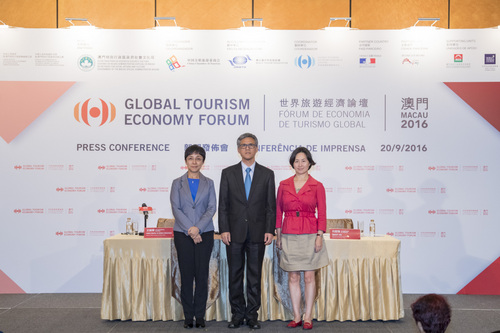
The Global Tourism Economy Forum (“GTEF” or “the Forum”), scheduled to be held at Studio City Macau from 15 to 16 October 2016, will dedicate its 5th anniversary edition to the theme of “The Growing Consumer Class – Rethinking and Reshaping the Future Tourism Landscape” and will zero in on how this rising resourceful and tech-savvy group is more than ever the increasingly influential force in the tourism industry. A pre-event press conference was held at the Macau Tower Convention & Entertainment Center today (20 September), attended by Chief of Office of the Secretary for Social Affairs and Culture of the Macao Special Administrative Region Government, Ip Peng Kin, Director of Macao Government Tourism Office (MGTO), Maria Helena de Senna Fernandes, and Vice Chairman and Secretary-General of GTEF, Pansy Ho, who introduced the 5th anniversary programme of GTEF. In his speech during the press conference, Chief of Office of the Secretary for Social Affairs and Culture of the Macao SAR Government, Ip Peng Kin, stated that gaming and tourism industries stand as the pillar industries of Macao. While facing adjustments in gaming receipts as well as the quest of economic diversification, it has become a major issue to explore on ways to develop non-gaming industries and a greater variety of non-gaming elements. Through profound discussions on the change of consumption patterns, the Forum will offer a golden opportunity for Macao to turn the above goal into reality. With an exchange of insightful perspectives and sharing of experiences, the Forum will play an active role in opening up new horizons for the local tourism and leisure industry and fostering the city’s development into a World Centre of Tourism and Leisure. Vice Chairman and Secretary-General of GTEF, Pansy Ho, expressed her gratitude to the entire Macao community for its continuous support. During her introduction of this year’s theme, she underscored the immense power of the growing consumer class and the many dramatic changes it brings to the global economy. “The consumer ecosystem has been transformed from a provider-driven ‘old economy’ to a consumer-driven ‘new economy’. This edition of GTEF will explore how the growing consumer class is reshaping the global tourism industry, and how their consumption behavior and use of technology has brought unprecedented changes to the industry,” she remarked. In celebration of its 5th anniversary, GTEF has invited France and Beijing to grace the Forum as its featured partners this year. Featured as GTEF’s Partner Country, France will bespeak how the country continues its cultural legacy and maximizes its spread of influence beyond borders through cultural exchanges in a session titled “France: Arts and Culture as Drivers of Tourism”. Featured as GTEF’s partner city, Beijing Municipality will showcase the state capital as an epicenter of Chinese culture and economic power, shedding light on China’s three millennia of history and heritage and on the distinctive preferences of Chinese consumers. GTEF 2016’s thought-provoking program will begin with its signature “Face to Face, Ministers and Private Sector CEOs” session in collaboration with the World Tourism Organization (UNWTO), where leadership from the public and private sectors will tackle the subject of “Harnessing the 1 Billion+ Opportunities”. Industry leaders will share various insights in sessions such as “Maximizing the Dualities of the Chinese Consumers”, “Embracing the Multi-faceted Chinese Travellers” and “Tourism and Technology: the Inseparable Duo”. For this anniversary edition, GTEF will present a series of inspiring new sessions, including “GTEF 5th Anniversary Special Keynote - The Forces Shaping China's Economic Future”, a high-level dialogue between a heavyweight Chinese dignitary and a visionary business leader; “Youth Leadership Roundtable – Understanding the Millennial Consumer and Social Engagement”; “Urban Tourism Consumption Revolution”; and “Investment Workshop – The Burgeoning Consumer Class: Investing in a New Era”. During the Forum, UNWTO and the Global Tourism Economy Research Centre (GTERC) will present their third Joint Annual Report on Asia Tourism Trends, with special chapters on travel trends driven by the growing consumer class and tourism investment (infrastructure investment and human capital investment), providing once again an in-depth analysis of the latest tourism development in Asia. GTEF is committed to contributing to the development of Macao into a World Centre of Tourism and Leisure and promoting moderate diversification of the local economy. This year, GTEF has initiated a MICE hospitality training programme in partnership with the Institute for Tourism Studies (IFT) for the first time. 20 participating students will be trained in hospitality roles such as VIP guest reception and exhibition ambassador during GTEF 2016. Offering a rewarding experience, the training programme will prepare the students for a future career in hospitality. In addition, GTEF plans to launch a series of internship programmes in 2017 for local tertiary students dedicated to pursue a career in the field of MICE tourism. Further details will be announced in later dates. Dedicated to strengthening its function as an exchange platform valued by delegates, GTEF 2016 offers free access passes not only to local tertiary students but also to members of local tourism community to meet with tourism and economy ministers, government officials as well as key decision makers from the world’s foremost tourism and tourism-related enterprises; to establish new contacts and explore business synergy and collaboration. On the other hand, GTEF will publish the Experience Macau Travel Guide, introducing delegates to the unique cultures and tourism resources in different districts across the city, for the purpose of promoting community tourism in Macao and broadening GTEF’s positive impact to the community at large. GTEF is honored to have China Daily, Pacific Asia Travel Association (PATA), World Tourism Cities Federation (WTCF), Bank of America Merrill Lynch and BNP Paribas as collaborative partners and sponsors for this year’s Forum sessions. In recognition of GTEF’s global stature developed scrupulously in the last four years, Musée du Louvre, the globally prestigious museum in France, will host a Fundraising Gala Dinner during GTEF 2016, effectively endorsing the GTEF brand and Macao’s world-class MICE capabilities. For further information about GTEF, please visit www.gte-forum.com and stay tuned for the latest news released by its official social media channels.
…
UM PhD student joins drug design project against Ebola at Oxford
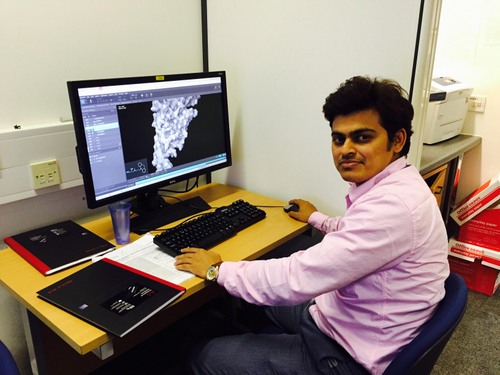
Mr Faraz Mohammadali Shaikh, a doctoral student from the University of Macau (UM) Faculty of Science and Technology (FST), has received an internship offer from the Wellcome Trust Centre for Human Genetics at the University of Oxford, United Kingdom. Shaikh will participate in a drug design project against the Ebola virus. Ebola is a highly virulent pathogen which can cause a severe hemorrhagic fever with a high death rate. Shaikh will work on the computational methods for designing drugs against Ebola. He will use computer simulations and fragment-based molecular docking to explore viral activity – in particular how the virus enters the host cell – at the atomic level, and investigate ways to effectively inhibit virus attachment and membrane fusion. The goal of this research project is to identify chemical entities as potential candidates for developing drugs against Ebola. This project is headed by Prof David Stuart, director of Oxford’s Division of Structural Biology. The world-class research group at the division has been focused on solving the complex problem of structure-function relationship of viruses of different sizes, and the puzzles of virus-receptor interactions and virus assembly, with innovative experimental and computational techniques. Shaikh has been working on protein flexibility algorithms and drug design applications in the Computational Biology and Bioinformatics Lab, headed by Dr Shirley Siu Weng In, since September 2015. He has worked as a senior research fellow at the Centre of Excellence at the National Facility for Drug Discovery Complex, Rajkot, India. He received the DBT Senior Research Fellowship from the Indian government from 2013 to 2015. So far he has published more than ten papers in international journals.
…