

Macao SAR Government Portal
News
Closing Notice of Communications Museum
Communications Museum will be closed from the afternoon of February 19 (Thursday) to February 23 (Monday) during the Lunar New Year. 9th Anniversary of Communications Museum
In celebrating its 9th anniversary, Communications Museum will be open to the public free of charge on March 1. The Museum Shop will provide commemorative cancellation service to the public. The awards ceremony will be held in the Museum Auditorium in the afternoon to present prizes to winners of the Science and Arts Activity for Primary Students, Electronic Device Construction Competition and Draw My Story of Stamps Contest, as well as the announcement of the result of Stamp Poll "My Favourite Stamps of Macao, 2014". This year the Communications Museum will focus on the promotion of "Exhibition-In-School". The Museum has designed and produced two sets of portable exhibits for exhibition in schools. The "Music with Electromagnetism" consists of six mobile exhibits to introduce about electricity and magnetism, including the "Static Electricity Sensor Drum", "Metal Sensor Xylophone", "Magnetic Detector Violin", "Human Resistor Piano", "Graphite Rock-and-Roll" and "Van de Graaff Generator". The "Evolution of Telecommunications Technology" introduces about the principals of communication and transmission. Its six mobile exhibits include the "Morse Telegraph", "Pointer Telegraph", "Manual Switching", "Automatic Switching", "Wired Transmission" and "Wireless Transmission". These two sets of portable exhibits are suitable for exhibiting at primary and secondary schools. We will arrange Facilitators to provide special guiding of the exhibition in schools, and students can experiment by themselves or join a guided tour as part of their class o break time at the school. All schools are welcome to request for more information or book the service.
…
Results of the 2015 Communications Museum Electronic Device Construction Competition –“Fighting for Every Gram”
Organized by the Communications Museum and co-organized by the Institute of Electrical and Electronics Engineers, the Electronic Device Construction Competition took place between January 10 and 17. The panel of judges, constituted by Ph.D. Cheang Tak Son and Ph.D. Vai Mang I, Institute of Electrical and Electronics Engineers of Macau, Ph.D. Wong Chi Kong, Faculty of Science and Technology of University of Macau, Ph.D. U Kin Tak, Faculty of Information Technology of Macau University of Science and Technology, Ph.D. Wong Seng Fat, Macau Institution of Engineers and a representative of Communications Museum, has evaluated 37 Junior Secondary teams and 66 Senior Secondary teams from 17 schools that participated in the competition. The awards presentation ceremony will be held in the Museum Auditorium on March 1. All participation works will be exhibited in the Museum from March 1 to 15. Winners of Junior Secondary Group
1st Prize: Yuet Wah College, Macau – Chan In Wang, Tam Io Lon
Supervisors: Chan Hoi Man, Tam Man Tou
2nd Prize: St. Joseph Diocesan College (5th Branch) – Sou Long Kit, Hui Yau Hong, Hong Wai Kai, Vong Kuok Kin Supervisors: Lam Chan Cheong, Francisco da Silva, Lai Weng Hou Top 6 Finalists:
1. Yuet Wah College, Macau – Lao Kin Wang, Ip Chi Fong
Supervisors: Chan Hoi Man, Tam Man Tou
2. Yuet Wah College, Macau – Sou Weng U, Lei Hou Tin
Supervisors: Chan Hoi Man, Tam Man Tou
3. Yuet Wah College, Macau – Choi Ka Hou, Chan Cheok Hei, U Chan Wai
Supervisores: Chan Hoi Man, Tam Man Tou
4. Chan Sui Ki Perpetual Help College – Che Ka Kun, Leong Ka Tong, Chu Yan Wai, Lin Zhenghao. Supervisors: Choi Leong, Lung Ken Ho Leslie, Loi Hoi Kei
5. Tung Sin Tong Middle School – Lam Ka Kei, Lam Kit I, Ng Weng Wa, Yang Chi Lou
Supervisors: Tan Li Wen, Tou Un Hong
6. Tung Sin Tong Middle School – Nie Jiawen, Ku Sin Hang, Lei Kin Hou, Chong Io Tong
Supervisors: Tan Li Wen, Tou Un Hong Winners of Senior Secondary Group
1st Prize: Yuet Wah College, Macau – Lei Kai Chong, Mak Chi Pong
Supervisores: Chan Hoi Man, Tam Man Tou
2nd Prize: Yuet Wah College, Macau – Kan Sio Kuan, Sit Hou Fai, Fong Wai Cho
Supervisores: Chan Hoi Man, Tam Man Tou Top 6 Finalists:
1. Yuet Wah College, Macau – Choi Iat Long, Li Meng Hou, Chong Ion Nam
Supervisors: Chan Hoi Man, Tam Man Tou
2. The Workers' Children High School, Macau – Lao Ka Fung, Leong Weng Kit, Chan Cheok Heng. Supervisors: Chio Cheng Fai, Liang, Yi Xing, Tong Kin Fai
3. Estrela do Mar School – Ao In Cheng, Ho Sut Teng, Kuan Oi Iao, Chao Ho I
Supervisors: Cheong Ka Iong, Ng Ka Lai
4. Sheng Kung Hui Choi Kou School (Macau) – Lam Seng Kin, Wong Chi Kit, Wong Chan Hong. Supervisor: Wong Kai Meng
5. Yuet Wah College, Macau – Chan Hei Wang, Chio Song Kit
Supervisors: Chan Hoi Man, Tam Man Tou
6. Chan Sui Ki Perpetual Help College – Chan Chon Hou, Mok Hou Cheng, Lao Kam Fung, Kwan Keng Chon. Supervisors: Cheang Pou Kuong, Tou Sio Lon, Choi Leong. Appreciation Awards:
1. Yuet Wah College, Macau / The Workers' Children High School, Macau – Lai Hok In, Kuan Hou Him. Supervisor: Lai Iong Hou
2. Sacred Heart Canossian College – Cheang Kit Ieng, Ao Ieong Ka Lam, Chang I Lam, Ng Meng Chan. Supervisors: Lam Tai Long, Pang Chi Seng, Lao Chi Weng
…
The cachet of Macao Post
On 2nd March 2015, a cachet will be available for our customers at the Carmo Post Office. Besides the new cachet, the existing cachets are available at the Philatelic Shop of Macao Post Headquarters, "Rua do Campo" Post Office, Maritime Ferry Terminal Post Office, Airport Post Office and the Communications Museum. The cachets let our residents or tourists to commemorate their visit at the Post Offices. These cachets are for commemoration use only, and do not carry any postal function. The users should not cancel the stamps by these cachets, or the stamps will be invalidated.
…
Commemorative postmark cancellation service of “9th Anniversary of Communications Museum”
To celebrate the 9th Anniversary of Communications Museum, Macao Post announces that a Temporary Post Counter will be set up at our Philately Shops located at Macao Post Headquarters and Communications Museum on 1st March 2015 to provide the commemorative postmark cancellation service for the "9th Anniversary of Communications Museum". Opening hours are as follows: Philately Shop of Macao Post Headquarters: 9:00 to 17:30 Shop of Communications Museum: 9:30 to 17:30 Welcome to visit and collect Macao Stamps!
…
Commemorative postmark cancellation service of “131st Anniversary of Macao Post”
To celebrate the 131st Anniversary of Macao Post, Macao Post announces that a Temporary Post Counter will be set up at our Philately Shop located at Macao Post Headquarters and the Communications Museum on 1st March 2015 to provide the commemorative postmark cancellation service for the "131st Anniversary of Macao Post". Opening hours are as follows: Philately Shop of Macao Post Headquarters: 9:00 to 17:30
Shop of Communications Museum: 9:30 to 17:30 A commemorative envelope will be distributed to public. Welcome to visit and collect Macao Stamps!
…
Small and medium-sized enterprise credit statistics, second half of 2014 (ended 31.12.2014)
According to statistics released today by the Monetary Authority of Macao, new SME lending approved by Macao banks continued to grow in the second half of 2014. Concurrently, the utilisation of SME credit in proportion to the credit limit approved by banks rose when compared with the previous survey period. New lending approved In the second half of 2014, new SME credit limit approved by Macao banks totalled MOP25.4 billion, up by 9.4% from the first half year of 2014 or 55.8% from the same period last year. The collateralised ratio, which indicates the proportion of credit limit with tangible assets pledged, was 82.1%, up 6.8 percentage points when compared with the last survey period or 4.4 percentage points when compared with the same period of 2013. Credit utilisation As at end-December 2014, the outstanding value of total SME loans increased 15.1% from end-June 2014 or 48.4% from a year earlier to MOP60.0 billion. When compared with end-June 2014, SME loans to "non-monetary financial institutions", "restaurants, hotels and similar activities" and "wholesale and retail trade" increased at respective rates of 143.1%, 10.4% and 8.9%, whereas those to "electricity, gas and water", "education" and "manufacturing" dropped 43.0%, 18.0% and 12.6% respectively. The utilisation rate, defined as the proportion of outstanding credit balance to the credit limit granted, rose 2.3 percentage points from six months ago to 66.7%. Delinquent loans At the end of 2014, the outstanding balance of delinquent SME loans decreased by 7.9% from six months ago to MOP131.1 million. Compared to a year ago, the balance dropped 9.2%. The delinquency ratio, a ratio of delinquent loans outstanding balance to total SME loans outstanding, dropped 0.05 percentage points from end-June 2014 or 0.14 percentage points from a year earlier to 0.22%.
…
Tenders to be invited for radio-despatched taxis
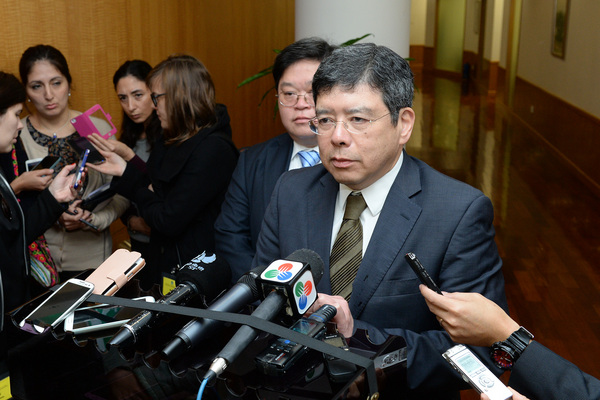
The Government would invite tenders for the operation of radio-despatched taxis in next few months, said the Secretary for Transport and Public Works, Mr Raimundo Rosario. But the number of taxi licenses would stand between 1,200 and 1,300, slightly more than the present total. There were 100 radio-despatched taxis in Macao until the operator ceased operation in November last year. The Secretary was speaking to reporters on 11 February after attending a Legislative Assembly committee to monitor concessions of land and public construction, which discussed the concessions of taxi and bus services. On bus services, he said the Government was negotiating with two operators to update present contracts, which the Commission Against Corruption had said were illegal.
…
UM signs MOU with Indian Institute of Technology Guwahati
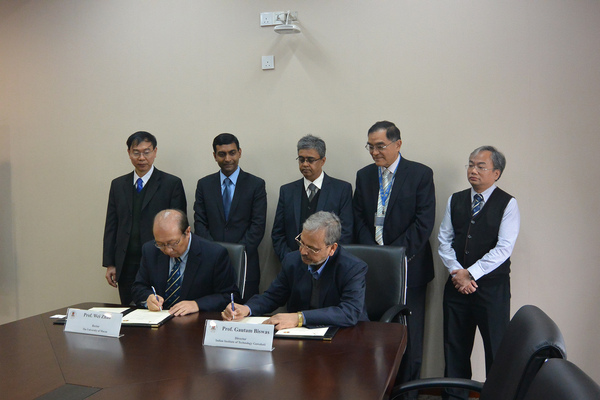
The University of Macau (UM) has signed a memorandum of understanding (MOU) with the Indian Institute of Technology Guwahati (IITG), in order to advance and enrich the academic programmes and promote exchange of students. This is the first top institution in India to sign such a document with UM. According to the MOU, UM and IITG will encourage contact and cooperation between their faculty members, departments, and research institutions, and will pursue various forms of cooperation, including visits of academic staff to deliver lectures, hold seminars and discussions, teach courses, conduct research and supervise student studies; visits of students to attend courses and carry out studies; and joint development of teaching programmes and collaboration of faculty and students in research projects. The MOU was signed by UM Rector Wei Zhao and IITG Rector Gautam Biswas. The signing ceremony was witnessed by Prashant Agarwal, consul general of India to Hong Kong and Macau; Ravi Sinha, consul of India to Hong Kong and Macau; Prof Chuxia Deng, dean of UM's Faculty of Health Sciences; Prof Tam Kam Weng, associate dean of UM's Faculty of Science and Technology; Prof Da-Hsuan Feng, director of UM's Global Affairs Office and special advisor to Rector. 'Ever since the world-renowned TV programme, 60 Minutes, produced by CBS of the United States, showed the intellectual prowess of the early seven Indian Institutes of Technology, one of which being Guwahati, the world became aware of the importance of these institutions,' says UM Rector Wei Zhao. "As UM launches a new global strategy, it is natural that we want to establish close links with IIT Guwahati. Both Rector Biswas and I anticipate significant collaboration between our two institutions which will benefit our two regions!" Established in 1994, IITG is equipped with world-class infrastructure for carrying out advanced research. The signing of the MOU will help to promote mutual friendship between the two universities and facilitate the cooperation in teaching and research in areas of mutual interest.
…
Mortgage loans statistics, December 2014
According to statistics released today by the Monetary Authority of Macao, new approvals of residential mortgage loans (RMLs) and those of commercial real estate loans (CRELs) increased simultaneously in December 2014. With regard to outstanding balance, RMLs and CRELs both witnessed increases. New lending approved In December 2014, new RMLs approved by Macao banks increased 9.7% month-to-month to MOP3.7 billion; of which, 95.3% was extended to residents. In terms of value, new RMLs to residents and those to non-residents increased 7.1% and 116.6% respectively. When compared with the same period of 2013, new approvals of RMLs witnessed an increase of 23.8%. New RMLs collateralised by uncompleted units (i.e. equitable mortgage) increased by 93.0% month-to-month to MOP789 million. The equitable mortgage extended to residents, which accounted for 91.8% of the total, increased 85.6% while the amount to non-residents surged by 250.1%. New CRELs increased by 74.4% month-to-month to MOP6.3 billion; of which, 87.7% was granted to residents. On an annual basis, new approvals of CRELs increased by 172.7%. The surge of CRELs was mainly driven by large amounts of loans approved to some property developers, using commercial properties already acquired as collaterals and for purposes other than purchase of properties. In terms of value, new CRELs to residents and non-residents increased 60.6% and 347.5% respectively. Outstanding balances As at end-December 2014, the outstanding value of RMLs reached MOP152.9 billion, an increase of 1.3% from one month earlier or 29.3% from a year ago. The resident component made up 94.1% of the total. Compared to end-November 2014, outstanding RMLs to residents and non-residents rose 1.3% and 1.7% respectively. Concurrently, the outstanding value of CRELs increased 3.4% from end-November 2014 and was up 43.1% from end-December 2013 to MOP122.0 billion. Residents accounted for 90.2% of the loans. Compared with one month earlier, outstanding CRELs to residents and non-residents grew 2.8% and 9.4% respectively. Delinquency ratios At the end of December 2014, the delinquency ratio for RMLs remained virtually unchanged from a month ago at 0.07% or increased 0.01 percentage point from a year ago. The ratio for CRELs was 0.05%, down 0.01 percentage point from a month ago or up 0.02 percentage points from end-December 2013.
…
Consumer Council released latest ‘Supermarket price survey’ Surveyed spots included supermarkets in N. Sra. de Fátima Parish
Consumer Council conducted its third 'Supermarket price survey' in February on 10 February for the implementation of Section 2b), Article 10, Law 4/95/M of 12 June. Surveyed locations included 8 supermarkets in Toi San, Ilha Verde and Fai Chi Kei areas in N. Sra. de Fátima Parish. The latest 'Supermarket Price Survey' is now available on Consumer Council's website (www.consumer.gov.mo), and the 'Supermarket Price Information Platform' iPhone and Android apps. The survey is also available free of charge at the offices of Consumer Council, IACM's Iao Hon and S. Domingos Markets, bookstores and libraries. Consumers may also access the resources through WAP channels on their mobile phones. With reference to the local six parishes and the number of supermarkets in each parish, the Council has divided over 100 supermarkets into 8 areas for price collection. The Council collects prices from these supermarkets for the provision of a more comprehensive database for consumers to check price discrepancies and make price comparisons according to their desired locations. For inquiry, please call 8988 9315.
…